This guide explains the main exit-device types, what affects their durability, and how to compare options before repairing or replacing commercial door hardware.
What is an exit device?
An exit device is door hardware operated by pressing a bar, push pad, or similar actuating surface to release the door’s latch or latches. People commonly call these devices panic bars, crash bars, or push bars.
The outside of the door may remain secured while the inside provides the required means of exit. Depending on the configuration, exterior entry may use a key, lever, pull, or electrified trim.
Appearance alone does not tell you whether a device is suitable for a particular opening. Its listing, configuration, door compatibility, and installation matter.
Panic hardware and fire exit hardware are different
Panic hardware and fire exit hardware can look almost identical, but they are not interchangeable descriptions.
Panic hardware is listed for panic operation. Fire exit hardware is intended for appropriately rated fire-door applications and must maintain the required latching function as part of the assembly.
Some non-fire-rated panic devices offer mechanical dogging: a feature that holds the latch retracted for convenient passage. Mechanical dogging is not permitted on fire exit hardware, because a fire door needs an active latch. Electric latch retraction can provide a similar convenience on fire exit hardware only with a suitable listed arrangement and the appropriate control sequence, such as letting the latch project when the fire alarm activates (Allegion: panic hardware basics (opens in a new tab)).
A visible “panic hardware” or Underwriters Laboratories (UL) marking does not, by itself, establish that a device is fire exit hardware. Verify the hardware identification and the door assembly’s labels and requirements.
Which openings require panic or fire exit hardware depends on the occupancy, use, adopted code, and local requirements. Have the opening assessed rather than selecting solely from a product photograph.
The main types of commercial exit devices
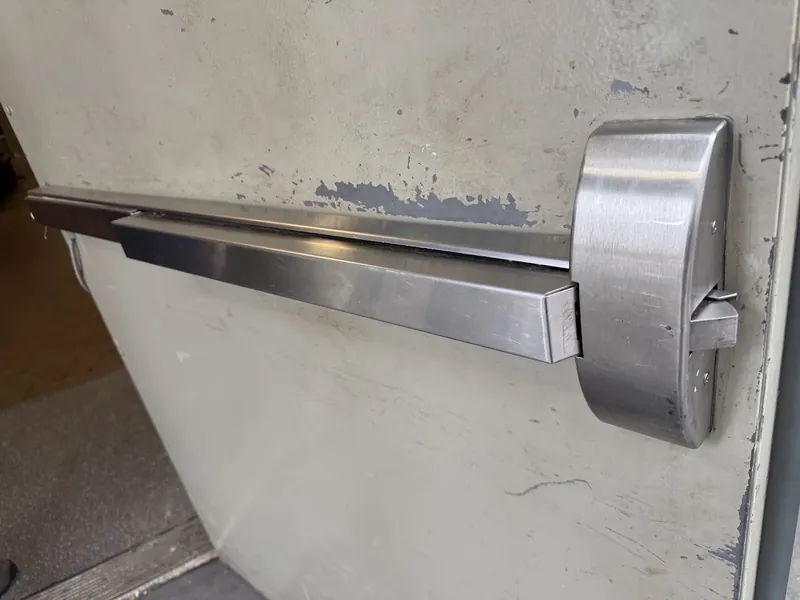
Rim exit devices
A rim exit device has a latch mechanism mounted on the door surface. The latch engages a strike at the frame or, in some paired-door arrangements, at a mullion.
This is a common configuration for commercial doors because the principal latch mechanism is accessible for inspection and service.
On paired doors, a suitable mullion can give rim devices a central latching point. Some applications use a removable mullion to accommodate a wider clear opening, but the selection must suit the complete assembly.
Good fit: openings where the door, frame, strike, and any mullion are compatible with rim hardware.
Watch for: loose strikes, latch misalignment, damaged mounting points, and doors that do not close into the latch consistently.
Surface vertical rod exit devices
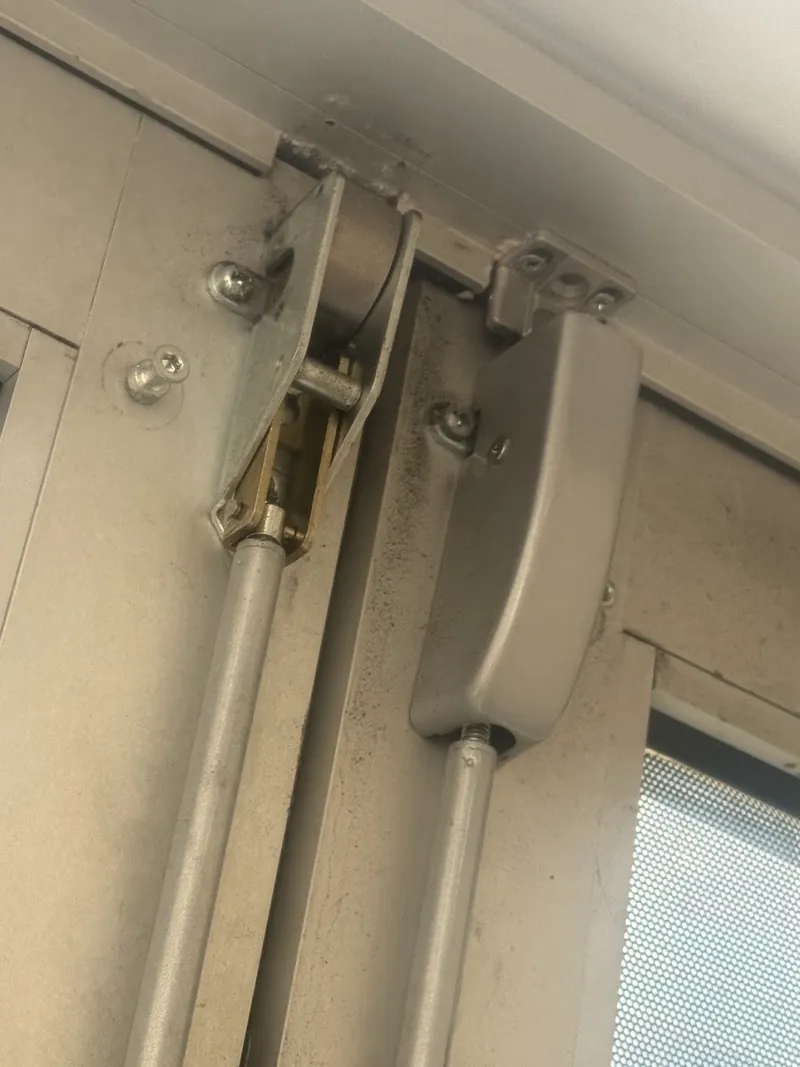
Surface vertical rod devices connect the operating mechanism to latches near the top and, in many configurations, the bottom of the door. The rods are visible on the door face.
These devices can be useful on paired openings where a central mullion is undesirable. The exact arrangement depends on the device, door assembly, and listing.
The exposed mechanism is accessible for service, but rods and lower components can be affected by carts, cleaning equipment, impacts, or changes in alignment. Protective rod and latch guards are available for some devices and applications.
Some listed configurations omit a bottom rod. That does not mean a bottom rod can simply be removed from an existing installation. Use only a configuration permitted for that opening.
Good fit: compatible paired or single doors needing vertical latching.
Watch for: rods that bind, loose guides, damaged lower hardware, and latches that release or engage inconsistently.
Concealed vertical rod exit devices
Concealed vertical rod devices place much of the rod mechanism inside the door. They can provide a cleaner appearance and reduce exposure of the rods to direct impacts.
That appearance comes with preparation and service considerations. The door must be suitable for the device, and access to concealed components can make adjustment or repair more involved.
Concealed rods do not eliminate alignment requirements. Door sag, frame movement, or problems at the top and bottom latches can still affect operation.
Good fit: compatible doors where concealed hardware is appropriate and the required preparation can be provided.
Watch for: device-to-door compatibility, access for maintenance, and latching problems that are difficult to see from the door face.
Mortise exit devices
A mortise exit device operates a lock case fitted into the edge of the door. The push bar releases the mortise latch through the device’s operating mechanism.
This configuration depends on compatible door preparation, trim, handing requirements, and lock-case functions. It should not be treated as a direct substitute for a rim device simply because both have horizontal push pads.
Good fit: openings designed or properly prepared for a mortise exit-device system.
Watch for: existing preparation, lock-case compatibility, trim function, and the cost of converting the opening.
Quick comparison: which configuration fits the opening?
| Device type | Where it latches | Typical selection reason | Main service consideration |
|---|---|---|---|
| Rim | At a frame strike or suitable mullion | Accessible mechanism and a straightforward latching arrangement | Strike alignment and reliable closing |
| Surface vertical rod | At the top and often the bottom | Vertical latching without a central mullion in suitable configurations | Rod adjustment, guides, and exposed components |
| Concealed vertical rod | At the top and often the bottom, with rods inside the door | Concealed appearance and reduced rod exposure | Door preparation and access to internal components |
| Mortise | Through a lock case in the door edge | Compatibility with a mortise-prepared opening and required functions | Lock-case, trim, and preparation compatibility |
These are configuration differences, not a ranking from best to worst.
Match the device to the application
Aluminum storefront entrances
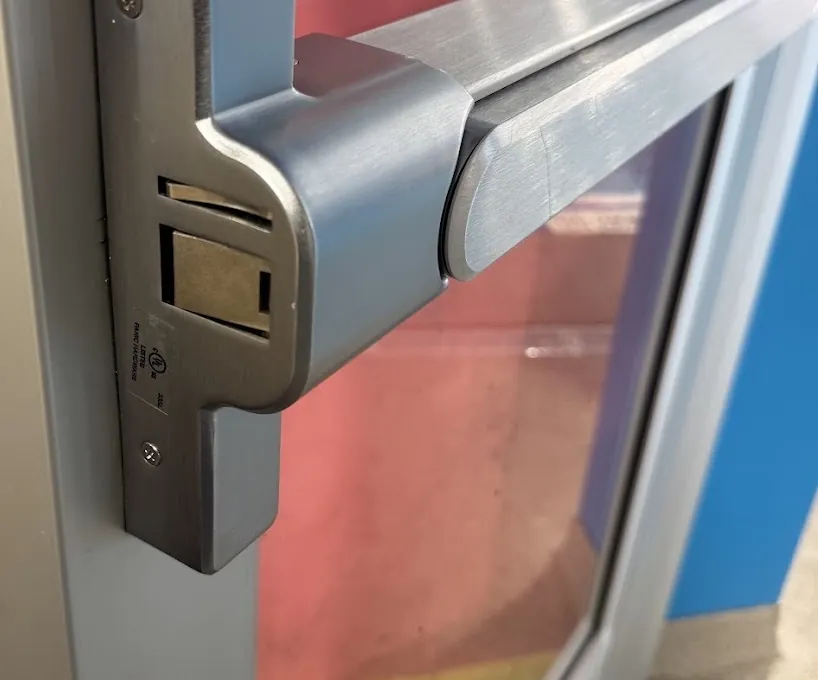
Storefront doors often have limited stile width and specific frame and glass clearances. The device and exterior trim must fit the available mounting area and work with the door’s preparation.
Do not assume that a wide-stile commercial device will fit an aluminum storefront door. Verify the manufacturer’s requirements for the actual device and trim.
Hollow-metal and wood doors
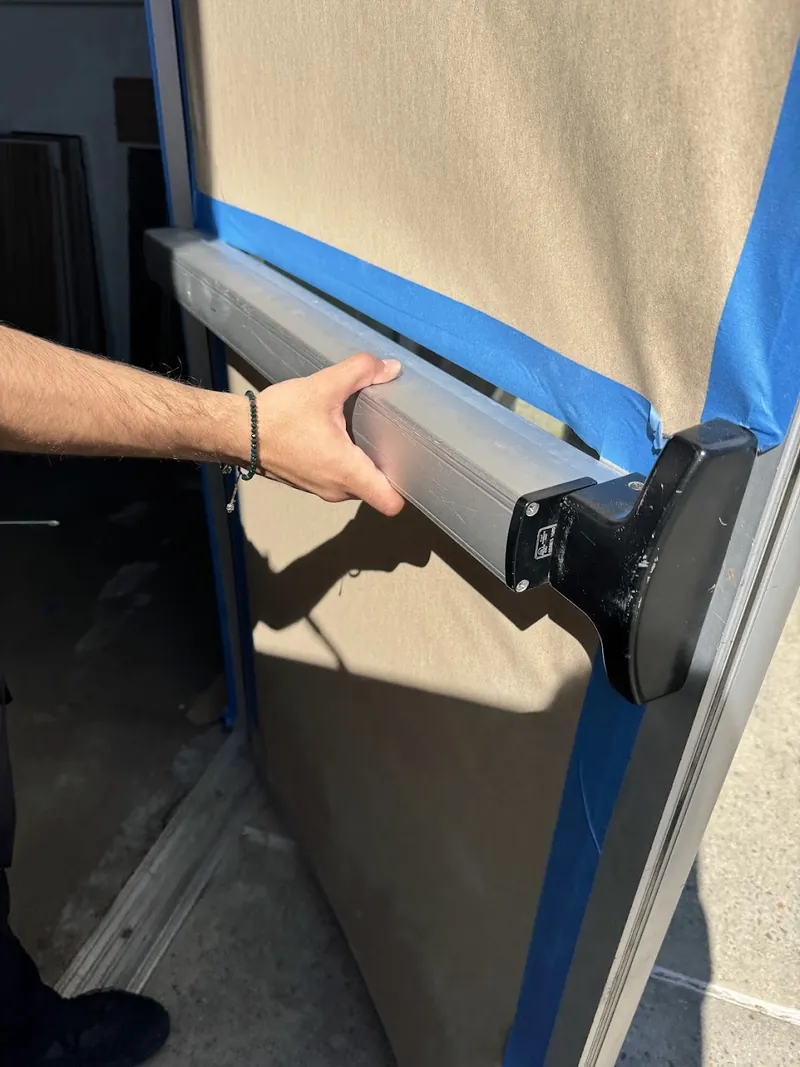
Both door materials can accommodate suitable commercial exit devices, but the mounting method, reinforcement, fasteners, and preparation must match the door and the manufacturer’s instructions.
An existing installation may leave cutouts or damaged mounting points that affect replacement options. On a rated opening, modifications must also remain within the requirements of the assembly.
Paired doors
For a pair, consider both leaves and the meeting stiles. Determine how each leaf latches, whether a mullion is present, and whether opening sequence or other coordinating hardware is involved.
The right solution depends on the complete opening. Two devices that work well on separate single doors are not automatically suitable for a pair.
Busy and impact-prone openings
High traffic increases the importance of reliable latching, secure mounting, appropriate device selection, and service access. Cart traffic may expose lower rods or strikes to damage.
Select for the way the opening is actually used. Repeated impacts, a poorly adjusted closer, or a door that drags should be addressed as part of the project.
What determines quality and durability?
Grade is useful, but it is not the entire comparison
ANSI/BHMA grading—from the American National Standards Institute and the Builders Hardware Manufacturers Association—provides a standardized way to evaluate specified hardware performance. Exit devices are covered by ANSI/BHMA A156.3. Confirm the applicable standard and grade for the exact product.
Two devices with the same grade can still differ in configuration, operating feel, available options, service procedures, parts support, and installation requirements.
A grade does not tell you how long a particular installation will last. Traffic, exposure, maintenance, and the condition of the door all influence its service life.
Installation quality affects the whole result
The bar, latches, strikes, trim, closer, hinges, and frame must work together.
A correctly selected device should be securely mounted and release and relatch as intended. The door should not need to be lifted, slammed, or pushed into position to engage the latch.
If the opening is out of alignment, replacing the bar alone may leave the original problem unresolved. That is usually a commercial door hardware repair covering the door, frame, and closer, not just the device.
Serviceability matters over time
Before buying, consider:
- Availability of replacement parts.
- Access to installation and service documentation.
- Compatibility with the existing trim and preparation.
- Local availability of someone familiar with the device.
- Whether future electrification is supported for the selected configuration.
- The time and disruption involved in servicing the opening.
The lowest hardware purchase price is not necessarily the lowest overall project cost.
Marks USA M9900 vs. Von Duprin 9927
A common question when replacing surface vertical rod hardware is whether a well-known premium brand is worth the extra cost. We have installed Marks M9900 rim devices on a Harlem apartment building entrance; the comparison below is limited to what each manufacturer documents for its surface vertical rod device.
Can an exit device work with access control?
Yes, an appropriately selected exit-device system can be integrated with access control.
Possible arrangements include electrified exterior trim, electric latch retraction, and monitoring functions. These do different jobs. A request-to-exit switch, for example, reports activity; it does not itself retract a latch.
The selected hardware must preserve the opening’s required egress operation. Power supplies, wiring, controls, and fire-door requirements must be considered together.
An electrified device is not automatically suitable for every door, and the same control sequence is not appropriate for every application. Specify the complete system rather than adding an electrical component in isolation. If you are planning card or phone entry for the building, our access control installation and repair page and our guide to commercial access control costs and benefits cover the rest of the system.
Common warning signs and what they can mean
| Symptom | Possible causes to investigate |
|---|---|
| The door needs to be slammed | Closer adjustment, door alignment, strike position, or latch interference |
| The push pad sticks or does not return normally | Binding, damage, loose components, or an internal mechanism problem |
| The door closes but does not stay latched | Strike engagement, alignment, latch condition, or unsuitable adjustment |
| Vertical latches release inconsistently | Rod adjustment, binding, loose guides, or top/bottom latch problems |
| Mounting screws repeatedly loosen | Damaged preparation, inadequate reinforcement, fastener selection, or repeated impacts |
| Exterior entry fails while interior exit still operates | Trim, cylinder, linkage, or electrified-entry components |
These symptoms are starting points for inspection, not a diagnosis. A failing exit door should be assessed promptly by a qualified professional.
Repair or replace?
Repair may make sense when the device is correctly specified, its main components and mounting points are sound, and suitable replacement parts are available.
Replacement may be more appropriate when the hardware is substantially damaged, important parts are unavailable, mounting preparation has failed, or the existing device cannot support the required function.
Evaluate the door and frame before deciding. A new device cannot compensate for a failing hinge, damaged reinforcement, or a distorted opening.
Ask for a proposal that distinguishes:
- Hardware repair or replacement.
- Door and frame corrections.
- Exterior trim and cylinder work.
- Electrical work, if applicable.
- Testing, adjustment, and any required documentation.
Before requesting a quote
Provide these details if available:
- Photos of the entire opening from both sides.
- A close-up of the device and any readable manufacturer or model label.
- Door width, height, thickness, and material.
- Whether it is a single door or a pair.
- Photos of door and frame labels on rated openings.
- A description of the problem and when it occurs.
- Existing outside-entry function.
- Any access-control or automatic-operator requirements.
Do not send photographs that unnecessarily expose key cuts, access codes, credentials, or sensitive customer information.
Frequently asked questions
Is every push bar panic hardware?
No. Appearance alone does not establish the listing or intended application. Check the exact hardware identification and documentation.
Does a UL marking mean the device is fire-rated?
Not by itself. Verify what the marking covers and whether the hardware is listed as fire exit hardware for the applicable assembly.
Can a rim device replace a vertical rod device?
Sometimes a different configuration can be used, but it may require changes to the frame, strikes, mullion, preparation, or trim. Compatibility and any rating requirements must be assessed first.
Are concealed rods always better than surface rods?
No. Concealed rods offer appearance and exposure advantages in suitable doors, while surface rods provide more visible access to the mechanism. The opening and service requirements determine which is appropriate.
Can I remove the bottom rod?
Do not remove it as an informal modification. Some systems have permitted less-bottom-rod configurations, but the exact device and opening must support that arrangement. On fire-rated doors, these configurations typically require additional components, such as an auxiliary pin, to keep the doors aligned in a fire.
Is the more expensive device always the better choice?
No. Compare the exact configuration, documented performance, service support, installation requirements, and long-term use of the opening.
Sources
- Allegion: Back-to-basics: Panic hardware (009972, Rev. 09/18) (opens in a new tab)
- Von Duprin 98/99 Series catalog (106590, Rev. 09/26) (opens in a new tab)
- Marks USA: exit devices product directory (opens in a new tab)
- Marks USA: X-it exit devices brochure (A704A, 1.2024) (opens in a new tab)
About the photos and product comparisonThe photos show exit devices in the field and illustrate configurations only. Except where a manufacturer marking is visible, the brands and models are not identified, and no photo shows a Marks M9900 or a Von Duprin 9927 or demonstrates code compliance, fire rating, or electrical operation. The product comparison reflects manufacturer documents checked on October 24, 2026; specifications and options change, so confirm them for the exact configuration before ordering.
Not legal or code adviceThis article is provided for general educational purposes and does not constitute legal advice, professional engineering advice, or an official determination of code compliance. Requirements vary based on occupancy, adopted code, fire-door labels, and individual door configurations. Building owners should consult qualified professionals and applicable authorities before undertaking regulated work.