First, understand what “1,200 pounds” tells you
A magnetic lock has two main parts: an electrically powered magnet attached to the frame and a steel plate attached to the door. When they meet, magnetic attraction holds the door closed. Removing power releases the magnetic holding force.
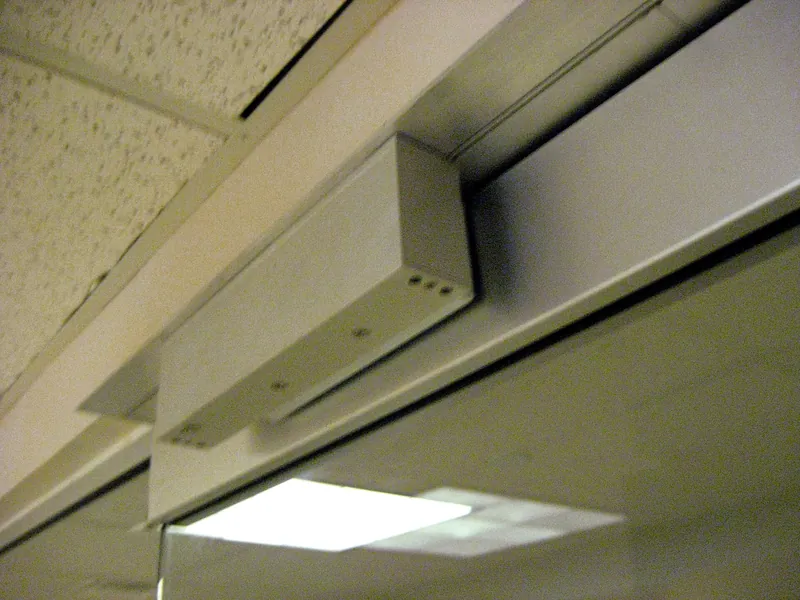
The advertised holding force describes resistance to a straight pulling force under specified conditions. It does not mean the entire doorway can withstand every impact or forced-entry attempt.
The magnet needs proper contact with its plate. The frame, brackets, fasteners and door alignment must also support the installation. Camden's troubleshooting instructions identify poor contact, dirty or damaged surfaces and incorrect electrical supply as causes of reduced holding force (Camden installation instructions (opens in a new tab)).
For an owner, that means a stronger or more expensive magnet will not fix a sagging door. For a GC, it means the door hardware, mounting and electrical work need to be coordinated.
What can a higher-priced lock buy you?
1. Evidence that it can handle demanding use
A main entrance may operate hundreds of times a day. A storage-room door may open only occasionally. Both need to lock securely, but their workload is different.
This is where ANSI/BHMA grades help.
ANSI is the American National Standards Institute. BHMA is the Builders Hardware Manufacturers Association. Their electromagnetic-lock standard, A156.23, establishes performance requirements covering repeated operation, strength, impact resistance and electrical behavior.
Grade 1 is the highest performance level, followed by Grade 2 and Grade 3. A product must meet all the applicable requirements for its claimed grade (ANSI's description of A156.23 (opens in a new tab)).
In plain language, testing asks:
- Will it keep working after extensive use?
- Can it resist pulling and sudden impacts?
- Will it operate properly under electrical stress?
- Will it release properly when power is removed?
BHMA's published overview explains that Grade 1 electromagnetic locks must withstand one million opening-and-closing cycles while continuing to meet electrical and strength requirements. It also describes tests for excess voltage, temperature rise and residual magnetism, the tendency to remain attracted after power is removed (BHMA's testing overview (opens in a new tab)).
What you're paying for: Documented performance under defined conditions, rather than relying solely on a holding-force claim.
A million laboratory cycles is not a guarantee of a particular number of years in your building. Installation and maintenance still matter. Also ask whether the exact model is independently certified or whether the manufacturer is declaring compliance, and which standard edition applies.
For a busy entrance, this evidence deserves attention. For a lightly used interior door, the highest grade may not be the feature that delivers the most value.
2. Knowing when the door is not secure
A basic magnetic lock holds the door closed. A monitored lock can also tell your access-control system what is happening.
There are two different questions:
Is the door closed? A door-position sensor answers that.
Is the magnet properly connected to its plate? A magnetic bond sensor provides information about that connection.
A door can look closed while misalignment prevents proper magnetic contact. That distinction matters at an unattended side entrance or a building managed from another location.
For example, Camden's CX-91S-12TDS includes door-status and lock sensors. The basic SECO-LARM E-941SA-1200 does not include a bond sensor or status light. Other manufacturers offer monitoring as an option (Camden model details (opens in a new tab), SECO-LARM product information (opens in a new tab)).
What you're paying for: The ability to discover a problem instead of assuming that a closed-looking door is secure.
The sensors must be connected and configured to produce useful remote alerts. Ask whether that work is included in the proposal.
3. Construction suited to the environment
An indoor office door and an uncovered gate need different protection.
Weather exposure, temperature and the way wiring enters the lock all affect suitability. A lock mounted inside a storefront may be protected even though the door leads outdoors. A gate lock may be exposed continuously.
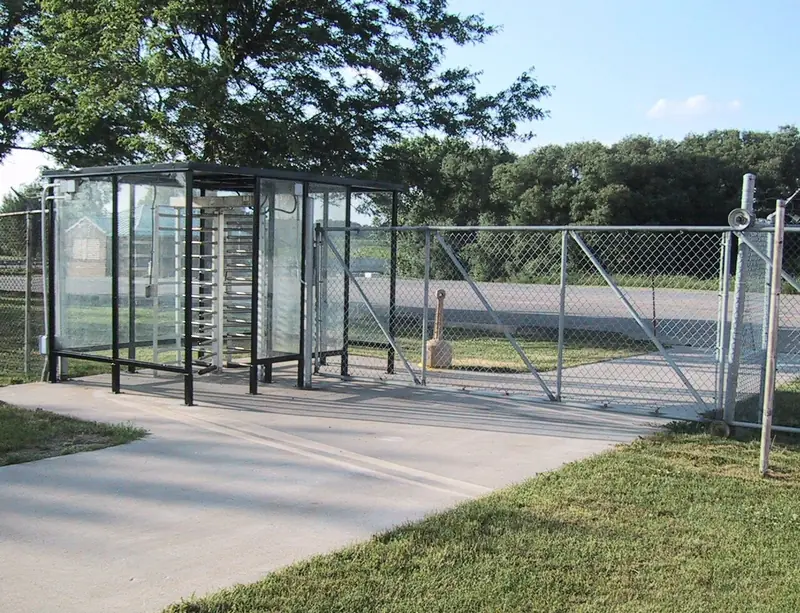
Securitron's M62, for example, has sealed construction and is specified for indoor or outdoor use, with configurations and accessories for different applications (Securitron M62 specifications (opens in a new tab)).
What you're paying for: Materials, sealing and installation options suited to the actual location.
Buying an indoor model for an exposed opening can turn a small saving into repeat service visits. Conversely, an interior office may not need the same environmental protection as an outdoor gate.
4. Lower demand on the building's power system
Current draw is easy to overlook because it sounds like an electrical detail. Across multiple doors, it can affect the project budget.
Maglocks need continuous power while locked. The power supply must support all the locks operating together, plus any readers, sensors and controls sharing that supply.
Consider ten doors at 12 volts (V):
Ten locks at 12 volts: total current
SECO-LARM E-941SA-1200 (0.50 amp per lock)
5 ampsSDC 1571 (0.25 amp per lock)
2.5 amps
The full bar equals 5 amps, the entire rated capacity of a 5-amp power supply.
| Manufacturer specification | Current per lock | Current for ten locks |
|---|---|---|
| SECO-LARM E-941SA-1200 | 0.50 amp | 5 amps |
| SDC 1571 | 0.25 amp | 2.5 amps |
These figures cover the locks only. Sources: SECO-LARM specifications (opens in a new tab), SDC specifications (opens in a new tab).
A 5-amp supply would have its entire rated capacity consumed by the first group, before other equipment or design allowance. The second group uses half that current.
What you're paying for: Potentially more capacity for additional doors, less demand on backup batteries and greater flexibility in power distribution.
Lower current also reduces voltage loss along the same cable. That matters when doors are far from the power supply.
Operating a compatible lock at 24V often reduces current compared with 12V, which can help with wiring. It does not automatically reduce energy consumption: voltage and current together determine power.
For a property manager planning an expansion, the useful question is: “Can our existing power system support these locks and the doors we expect to add?” Power-supply sizing must account for total load, individual output limits, cable runs and backup requirements (Altronix power and battery calculators (opens in a new tab)).
5. Easier installation and future service
Some price differences buy practical features that are most visible to the installer: adjustable mounting plates, accessible wiring, modular components and upgrade kits.
Those features can benefit the owner too.
SDC's 1571 family allows optional field upgrades without removing the lock from the frame. DynaLock's 2280 uses an adjustable mounting plate and a low-profile housing approximately 2-1/16 inches high. These features address different needs: servicing the equipment and fitting the available space (SDC datasheet (opens in a new tab), DynaLock 2280 details (opens in a new tab)).
What you're paying for: Features that may reduce installation work, make later changes easier or produce a better fit alongside the door closer and other hardware.
For GCs, checking these details before ordering can prevent field modifications and delays. For owners, service access becomes valuable when the building is occupied and downtime is disruptive.
What those differences look like in real products
These examples illustrate where the money can go. They are not a ranking of brands or an independent reliability test. All six advertise 1,200-pound holding force and support 12 or 24V direct current (DC) operation.
Approximate ranges are for the lock only. Seller, finish and options affect pricing; brackets, power equipment, controls and installation are additional. Retailer links are listed under Price references.
| Example | Approximate price range | Main purchasing consideration |
|---|---|---|
| SECO-LARM E-941SA-1200 | $100–$130 | Basic locking at a low equipment price; monitoring requires another version or separate equipment |
| Alarm Controls 1200S | $150–$250 | Straightforward locking; specify the separate monitored model when needed |
| Camden CX-91S-12TDS | $170–$200 | Includes monitoring features and an adjustable relock timer |
| SDC 1571V, aluminum | $300–$380 | Low current draw, modular construction and optional field upgrades |
| Securitron M62, base model | $400–$620 | Sealed indoor/outdoor construction; monitoring optional |
| DynaLock 2280-US28 | $600–$750 | Low-profile construction, adjustable mounting and noise-damping armature housing |
The table also shows why price alone is a poor guide: a model with monitoring can cost less than another manufacturer's basic lock. Compare the exact equipment and installation requirements.
A lockout can cost far more than the replacement lock
When an entrance will not release, the cost may include emergency service, troubleshooting, replacement equipment and interrupted business. Employees, customers and deliveries may be left waiting.
But a door that stays locked does not automatically mean the magnet has failed. Loss of power normally releases a maglock. A control or wiring fault may continue feeding it, or a mechanical problem may prevent the door from opening.
Securitron's troubleshooting guidance tells technicians to check for remaining voltage or current, sticky surfaces and obstructions when a lock will not release (manufacturer troubleshooting guide (opens in a new tab)).
Shutting off power to the entire building should not be the normal recovery plan. Battery backup may keep the lock powered anyway.
A good installation needs required exit-release arrangements and a documented way for authorized service personnel to isolate lock power. Before handover, make sure management knows where the equipment is, how service personnel can reach it during a lockout and whom to call.
Warranty terms matter, too. A replacement product does not necessarily cover diagnosis, removal, reinstallation or business interruption.
Safe exit is part of the installed value
A card reader controls entry. The complete system must also provide the exit arrangement required for the building.
The applicable code, occupancy and approved release method determine requirements for door hardware, sensors, manual release and alarm interfaces. A listed lock alone does not make the doorway compliant.
Fire-rated openings, hospitals and delayed-exit applications need particular attention. An adjustable relock timer does not authorize delaying someone's exit (2024 International Building Code (IBC), Sections 1010.2.10–1010.2.11 (opens in a new tab)). For New York City entrances, see our guide to NYC fire code requirements for building entrances.
For owners and GCs, this work belongs in the proposal, not as an unresolved detail after installation.
Buy the features your building will use
A higher-priced lock can be worth the money when it provides documented performance, useful monitoring, suitable environmental protection, lower power demand or easier servicing.
It does not automatically last longer, and a basic lock can be the right choice for a straightforward opening.
Before approving a proposal, ask:
- Why does this exact model suit the door and its daily use?
- Which monitoring and mounting features are included?
- Has the complete electrical load been checked?
- What is included for safe exit, testing and required approvals?
- How will the door be serviced if it stops working?
The right purchase is a complete, dependable doorway, with a price that accounts for installation, operation and future service.
Contact EntryPoint Security to discuss your magnetic-lock installation or replacement and identify which features are worth paying for at your property.
Price references
Retailer and manufacturer pages behind the approximate lock-only price ranges above.
- SECO-LARM E-941SA-1200: JMAC Supply (opens in a new tab), Newark (opens in a new tab)
- Alarm Controls 1200S: JMAC Supply (opens in a new tab), Maglocks.com (opens in a new tab)
- Camden CX-91S-12TDS: NewTech Industries (opens in a new tab), IP Security Depot (opens in a new tab)
- SDC 1571: UHS Hardware (opens in a new tab), ED Locks (opens in a new tab)
- Securitron M62: American Locksets (opens in a new tab), PartsSource (opens in a new tab)
- DynaLock 2280: Maglocks.com (opens in a new tab), DynaLock price list (PDF) (opens in a new tab)
Sources
- Camden: CX-91S Series installation instructions (PDF) (opens in a new tab)
- Camden: CX-90/91 Series magnetic locks (opens in a new tab)
- SECO-LARM: E-941SA-1200 product information (PDF) (opens in a new tab)
- SECO-LARM: E-941SA-1200 specifications (opens in a new tab)
- ANSI webstore: ANSI/BHMA A156.23-2022 Electromagnetic Locks (opens in a new tab)
- BHMA: A156.23 testing overview, Hardware Highlights (PDF) (opens in a new tab)
- Securitron: M62 specifications (PDF) (opens in a new tab)
- Securitron: magnetic lock troubleshooting guide (PDF) (opens in a new tab)
- SDC: 1570 Series datasheet (PDF) (opens in a new tab)
- DynaLock: 2280 low-profile magnetic lock (opens in a new tab)
- Altronix: power supply and battery calculators (opens in a new tab)
- International Code Council: 2024 IBC, Chapter 10, Means of Egress (opens in a new tab)
This article is provided for general educational purposes and does not constitute legal advice, professional engineering advice, or an official determination of code compliance. Requirements vary based on building occupancy, construction history, approved use, and individual door configurations. Building owners should consult qualified professionals and applicable authorities before undertaking regulated work.