1. What Should You Consider Before Choosing an Intercom?
A building intercom is a long-term investment.
Unlike consumer electronics, an apartment intercom typically remains in use for many years. Replacing it can affect every resident, require access to apartments, and involve modifications to doors, locks, and electrical infrastructure.
Before comparing brands, property owners should answer six questions.
1. How many apartments and entrances does the building have?
A 12-unit walk-up with one main entrance has very different requirements from a 150-unit building with a lobby, service entrance, parking garage, and several access-controlled areas.
2. What wiring already exists?
Many older NYC buildings have existing three-, four-, or five-wire intercom systems. Others have two-wire systems or more modern network cabling.
The condition and configuration of this wiring can make a substantial difference in installation costs.
3. Do residents need video and smartphone access?
Some buildings need only reliable two-way audio and a door-release button. Others want video calling, mobile credentials, temporary visitor access, and remote management.
4. Does every apartment need a physical intercom?
An in-unit handset or monitor provides a dedicated device that does not depend on the resident owning a smartphone.
App-based systems can reduce installation work, but the building must evaluate accessibility, resident preferences, connectivity, and applicable code requirements.
5. Who will manage the system?
A small cooperative building may prefer minimal administration. A professional management company operating multiple buildings may benefit from centralized, cloud-based administration.
6. What is the acceptable total cost?
A system with a relatively inexpensive entrance panel may become expensive after purchasing apartment monitors, licenses, controllers, wiring, and ongoing service.
The relevant figure is the five- to ten-year total cost of ownership, not the price of the entrance panel.
2. What Does NYC Building Code Require?
Before selecting an intercom, owners must understand their legal obligations.
The eight-apartment requirement
Under NYC Building Code §1010.4.4 (opens in a new tab), buildings classified as Group R-2 and containing eight or more dwelling units are subject to intercommunication requirements.
The provision requires an intercommunication system at the main entrance that allows:
- Voice communication between a visitor at the entrance and an occupant of each dwelling unit.
- The dwelling-unit occupant to release the entrance door’s locking mechanism from within the apartment.
The code also provides an alternative arrangement for buildings with a full-time lobby attendant.
New York State Multiple Dwelling Law §50-a (opens in a new tab) establishes additional requirements for Class A multiple dwellings, with distinctions involving buildings erected or converted before and after January 1, 1968.
Older buildings should not assume exemption based solely on construction date. Applicable code provisions, tenant-consent rules, existing approvals, and building history must be reviewed together.
Does the code require a video intercom?
The basic intercommunication requirement specifically addresses voice communication and remote unlocking.
It does not universally require video.
A properly designed audio-only system may satisfy the applicable communication requirement.
Video is primarily an additional security and convenience feature.
Are smartphone-only systems compliant?
Intercoms and emergency exits
The intercom is only one component of the entrance system.
NYC Building Code requirements also address mechanical entrance locks, electric strikes, magnetic locks, door closers, and emergency egress.
A modern intercom does not automatically make the locking system compliant.
The entire door assembly must be evaluated—not simply the intercom panel.
For more information, read our related guide: NYC Fire Code Requirements for Building Entrances: What Every Property Owner and Manager Must Know in 2026.
3. Comparing the Major Intercom Systems
The following comparison focuses on the systems owners and managers are likely to encounter when upgrading NYC multifamily and commercial buildings.
| System | Primary strength | Management approach | Recurring software costs | Best-fit application |
|---|---|---|---|---|
| Akuvox | Broad features and flexible configurations | Cloud, with local options depending on configuration | SmartPlus services may carry fees | Small to large multifamily, mixed-use |
| ButterflyMX | Mobile experience and property management | Cloud-centered | Annual per-apartment fees | Professionally managed multifamily |
| Aiphone | Dedicated building communication and broad product portfolio | Local and remote options | Depends on mobile/cloud services | Long-term building infrastructure |
| Lee Dan | Traditional audio systems and replacement hardware | Primarily on-site | Generally no cloud subscription for conventional wired systems | Older buildings, economical repairs |
| Comelit | Wired video systems, retrofit flexibility, design | Local and cloud-enabled options | Depends on product and app service | Renovations, multifamily video upgrades |
| 2N | Premium IP hardware and integration flexibility | Local and My2N cloud | Paid cloud services; some free entitlements | High-end residential and commercial |
| Swiftlane | Mobile-first video access | Cloud-centered | Subscription quotation required | App-focused multifamily and offices |
These are product-positioning comparisons, not independently measured reliability rankings. Features and licensing vary by model, configuration, and contract.
Akuvox (opens in a new tab) — Feature-Rich and Flexible
Akuvox offers an extensive product family, including compact video door phones, touchscreen entrance stations, indoor monitors, access control readers, and compatible two-wire intercom equipment.
Its SmartPlus platform supports resident calling, mobile door release, temporary access credentials, and property management functions.
Advantages
Akuvox is worth considering when a building wants modern features without necessarily choosing a single proprietary cloud-centric configuration.
The product family provides options for smaller buildings, larger apartment communities, and projects combining intercoms with access control.
Compatible two-wire solutions can be especially attractive in older buildings where new cable installation would be expensive.
Akuvox also supports a range of integration and communication functions, depending on the selected equipment.
Considerations
The system has many possible configurations, which makes competent design and installation important.
Owners should verify device compatibility, firmware support, network requirements, and whether their chosen functions require SmartPlus subscriptions.
As of 2026, Akuvox uses service-based charging for SmartPlus community projects, with charges depending on the specific services activated.
Our assessment: Akuvox belongs on the shortlist for cost-conscious buildings that want modern video, smartphone access, and room to expand. Compare the complete bill of materials and recurring services, not simply the entrance panel price.
ButterflyMX (opens in a new tab) — Cloud-Based Convenience and Property Management
ButterflyMX is a cloud-centered property access platform used in multifamily and commercial properties.
Its video intercoms allow visitors to contact residents, while residents can use smartphones to communicate and grant access.
The company also offers access control, package-room, elevator, and other property-access products.
Advantages
ButterflyMX emphasizes simplicity for property managers.
Residents can be added or removed remotely, access permissions can be managed through an online dashboard, and integrations with property management software can reduce repetitive administrative work.
The company supports integrations with systems including Yardi, AppFolio, Buildium, RealPage, MRI Software, and BuildingLink.
An important benefit for renovation projects is that the main visitor communication system does not necessarily require new intercom wiring to every apartment.
Residents without smartphones can receive regular telephone calls through supported configurations.
Considerations
ButterflyMX requires an annual software subscription.
According to its published 2026 pricing information, the annual software fee is approximately $30–$42 per apartment, depending on features and integrations.
The entrance hardware is purchased separately, and installation, electrical work, door hardware, and other equipment add to the project price.
ButterflyMX offers certain offline access capabilities, but owners must confirm exactly which functions remain available during internet or power outages.
Our assessment: Particularly attractive to professionally managed buildings where cloud administration and resident convenience justify recurring software expenses.
Aiphone (opens in a new tab) — A Strong Choice for Long-Term Building Infrastructure
Aiphone is an established intercom manufacturer with products for multifamily housing, commercial buildings, schools, healthcare, and other facilities.
Its relevant multifamily product families include the GT Series and IX/IXG Series.
Advantages
Aiphone offers conventional hardwired communication systems as well as modern IP video intercoms.
The GT Series is a practical candidate for buildings seeking dedicated resident stations and a traditional building intercom arrangement.
The IX/IXG platform adds more advanced IP communication, mobile applications, guard stations, remote management, and integrations.
Aiphone offers configurations that can operate without mandatory ongoing cloud subscriptions for basic building communication.
That can be financially attractive when comparing long-term costs.
Considerations
Not every Aiphone configuration is subscription-free.
Depending on the selected system, mobile-app licenses, cloud services, cellular connectivity, and optional management features may involve additional charges.
Hardwired configurations also involve apartment stations, cable infrastructure, and installation labor.
Owners should compare the cost of a conventional wired installation against an app-based arrangement before deciding.
Our assessment: A strong candidate for buildings prioritizing dedicated communication equipment, predictable basic operation, and long-term serviceability.
Lee Dan (opens in a new tab) — A Practical Option for Older NYC Buildings
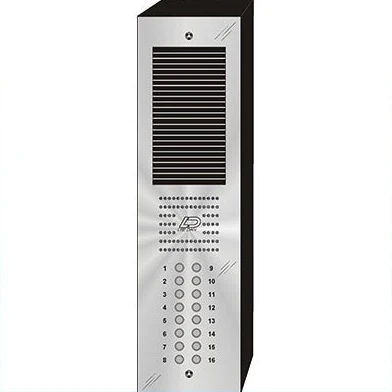
Lee Dan has a long history supplying apartment intercom systems and replacement components.
The company offers traditional apartment stations, entrance panels, amplifiers, and equipment compatible with various legacy intercom configurations.
This is particularly relevant in New York, where many older apartment buildings still operate audio-only buzzer systems.
Advantages
Lee Dan offers equipment for common three-, four-, and five-wire apartment intercom arrangements.
For buildings with a functioning but aging system, repairing or replacing existing components may be substantially more economical than replacing the entire intercom infrastructure.
Traditional wired audio systems also avoid the need for recurring cloud subscriptions.
Considerations
Conventional Lee Dan systems do not provide the same mobile-app experience, centralized cloud administration, or modern visitor-access features offered by cloud-focused platforms.
Compatibility must be established before replacing older equipment. Similar-looking apartment stations do not necessarily use compatible wiring or electronics.
Our assessment: An important option for smaller and mid-sized buildings seeking affordable repairs, dependable basic communication, or a like-for-like replacement rather than a complete technology upgrade.
Comelit (opens in a new tab) — A Strong Candidate for Wired Video Retrofits
Comelit offers audio and video intercoms, including Simplebus and IP-based ViP systems.
Its range includes modular entrance panels, in-unit monitors, and various gateway and integration options.
Advantages
Comelit is particularly interesting for buildings upgrading from traditional wired intercoms to video.
Its two-wire product options can, in suitable conditions, reduce the need for extensive replacement cabling.
Comelit also offers higher-end entrance panels that can complement renovated lobbies and modern residential buildings.
Its product portfolio supports both dedicated apartment monitors and selected mobile-enabled arrangements.
Considerations
Not every existing two-wire system can be reused with a new Comelit installation.
The existing wiring must be tested for condition, topology, distance, and compatibility.
Subscription fees also vary by product and connected service. Owners should not assume every Comelit app arrangement is free or that every conventional wired configuration requires a subscription.
Our assessment: Well worth comparing against Aiphone and Akuvox when renovating a building with existing intercom wiring.
2N (opens in a new tab) — Premium IP Intercoms and Advanced Integrations
2N, part of the Axis Communications group, offers premium IP intercoms and access control products.
Its portfolio includes modular entrance stations, touchscreens, indoor monitors, and systems designed for integration with broader security infrastructure.
Advantages
2N is especially relevant for buildings that value hardware design, integration flexibility, and sophisticated access control.
Selected products support SIP communication, ONVIF integration, mobile credentials, card readers, and other advanced functions.
These capabilities can be valuable in high-end apartment buildings, mixed-use developments, and commercial properties with existing security platforms.
Considerations
Premium equipment and specialized installation can increase initial costs.
2N’s My2N cloud platform uses paid services for residential projects, with certain free apartment-license entitlements depending on the installed equipment.
For example, qualifying indoor stations can provide free cloud-calling licenses under the manufacturer’s current program, while other apartments or services may require subscriptions.
Integration licenses may also be required for selected functions.
Our assessment: A strong option for premium installations where design, access control, and integration capabilities justify additional investment.
Swiftlane (opens in a new tab) — Mobile-First Access Control
Swiftlane offers video intercom and access control solutions for multifamily and commercial properties.
Its approach emphasizes smartphone interaction, remote management, and cloud-connected building access.
Advantages
Swiftlane is worth evaluating for buildings that want to manage residents, guests, employees, and access permissions remotely.
Mobile credentials and cloud-based administration can reduce reliance on traditional in-unit equipment.
Considerations
The overall cost depends on hardware, software subscription terms, building size, and the specific functions required.
Owners should obtain a written quotation covering annual charges, resident licenses, integration capabilities, support, and system operation if connectivity is lost.
Our assessment: A reasonable alternative to ButterflyMX for properties prioritizing app-based building access and centralized management.
4. How Much Does an Intercom System Cost in NYC?
Cost is one of the most important considerations for owners and condominium boards.
However, comparing entrance-panel prices alone produces misleading conclusions.
The installed cost depends on:
- Number of apartments.
- Number of entrances.
- Existing wiring.
- Audio-only versus video.
- Dedicated apartment monitors versus mobile applications.
- Electrical and network infrastructure.
- Door lock and closer condition.
- Required integration with access control.
- Building finishes and wall restoration.
- Software subscriptions and ongoing service.
Illustrative NYC installation budgets
The following ranges are broad planning allowances for a building with approximately 8–20 apartments and one principal entrance.
| System type | Illustrative installed budget |
|---|---|
| Conventional wired audio intercom | $2,500–$7,500 |
| Wired video intercom with apartment monitors | $6,000–$18,000 |
| App-based or IP video intercom | $5,000–$15,000 |
| Advanced multi-door or integrated system | $12,000–$30,000+ |
These are preliminary budgeting ranges informed by published NYC installer estimates, not standardized manufacturer prices or EntryPoint Security quotations. They assume ordinary site access and a reasonably straightforward installation. Extensive rewiring, structural work, electrical upgrades, multiple entrances, or premium finishes may increase costs substantially.
For larger buildings, the number of apartments and the selected resident communication method can change the budget dramatically.
Example: A 30-unit building considering ButterflyMX
ButterflyMX publicly lists an 8-inch surface-mounted video intercom at approximately $3,995 on its pricing page, subject to current offers.
It also publishes annual software charges of approximately $30–$42 per apartment.
For a 30-apartment property:
- Annual software: approximately $900–$1,260.
- Five years of software: approximately $4,500–$6,300.
- Entrance panel plus five years of software: approximately $8,495–$10,295.
That does not include installation, wiring, electrical infrastructure, lock hardware, internet service, maintenance, taxes, or other equipment.
The example demonstrates why a five-year comparison is essential.
An entrance panel’s purchase price may represent only part of the total cost.
The subscription question
Some buildings prefer a higher initial investment with minimal recurring software expenses.
Others prefer a cloud-based system that simplifies management and avoids installing dedicated hardware in each apartment.
Neither approach is universally better.
The right choice depends on how the building will actually use the system.
A cloud-managed intercom may save substantial management time in a 200-apartment property.
For a small 10-unit cooperative, however, the same management features may provide relatively little value compared with a conventional wired system.
Compare the total cost of ownership over at least five years, including subscription renewals, expected maintenance, and likely hardware replacements.
Estimate Your Preliminary Intercom Budget
Use this calculator for a preliminary planning estimate. Actual costs depend on wiring, door hardware, building conditions, labor, permits, equipment selection, and subscription terms. EntryPoint Security will provide a project-specific proposal after a site assessment.
Use this calculator for a preliminary planning estimate. Actual costs depend on wiring, door hardware, building conditions, labor, permits, equipment selection, and subscription terms. EntryPoint Security will provide a project-specific proposal after a site assessment.
Between 1 and 1,000.
Between 1 and 20.
A buffer for incidentals a remote estimate can't anticipate.
Preliminary estimate
Initial installation
$2,900–$8,700
5-year software
$0
5-year total
$2,900–$8,700
Excludes internet service, taxes, permits, major electrical work, structural work, and unusual door repairs.
Assumptions used for this estimate
- System type: Conventional wired audio
- 20 apartments, 1 entrance
- Wiring condition: Unknown / needs testing
- Building complexity: Straightforward installation
- Service/contingency allowance: Typical
- Five-year software subscriptions: not included
This is a preliminary planning estimate, not a quote or guarantee. It does not replace a site survey, code review, or written proposal.
Request a Building AssessmentThis calculator is for preliminary planning only. It does not replace a site survey, code review, or written proposal.
5. Reliability: What Happens When the Internet or Power Goes Down?
A good intercom should operate predictably during normal conditions and have a clearly documented failure plan.
Property owners should consider three potential failures.
Internet failure
Cloud-based systems depend on internet connectivity for at least some functions.
If the connection fails, remote video calls, cloud administration, and certain mobile functions may become unavailable.
Some systems provide local access functions or offline credentials, but these capabilities vary by manufacturer and equipment.
A wired intercom with local communication may continue supporting apartment-to-entrance calls even when the building loses its internet connection.
Some Akuvox door phones (cellular models such as the R20K-L and R29C-L) accept a SIM (subscriber identity module) card and can keep calling residents over the LTE (Long-Term Evolution) cellular network when the building’s internet is down. Confirm cell signal at the entrance and the cost of the data plan before relying on it.
Power failure
Most electronic intercom and access control systems require electrical power.
Where appropriate, an uninterruptible power supply (UPS) or other backup power system can help maintain operation during short outages.
However, backup power must be coordinated with the applicable locking and emergency-egress requirements.
The correct behavior of the door lock during a power failure is a separate safety consideration.
Hardware failure
Outdoor entrance panels are exposed to rain, temperature changes, vandalism, heavy use, and physical damage.
Owners should evaluate weather-resistance ratings, vandal-resistance specifications, parts availability, manufacturer support, and replacement procedures.
An inexpensive system can become costly if replacement components are unavailable or service requires replacing the entire installation.
Five questions to ask the installer
- What continues to work if the internet fails?
- What happens when the building loses power?
- Can residents still grant access from inside their apartments?
- How quickly can replacement parts be obtained?
- Who can service the system if the original installer is unavailable?
These questions are more useful than relying on a manufacturer’s general claims about reliability.
6. Property Management: The Hidden Cost of Operating an Intercom
Management requirements vary significantly between properties.
A 12-unit cooperative may change residents only occasionally.
A 150-unit rental building may have frequent move-ins, move-outs, deliveries, contractors, and staff changes.
Traditional intercoms generally require limited administration after installation, although changes to apartment directories and equipment repairs still need to be handled.
Modern cloud platforms can provide additional management tools, including:
- Remote resident directory updates.
- Temporary guest credentials.
- Contractor access schedules.
- Access event records.
- Mobile door release.
- Central management across multiple buildings.
- Integration with property management software.
These features can provide real operating benefits.
For example, when a tenant moves out, a connected management system may allow access permissions to be removed remotely instead of requiring an on-site visit.
However, administrators must be trained, permissions must be reviewed, and resident information must be handled appropriately.
For smaller buildings, these benefits should be weighed against subscription costs and the complexity of maintaining a cloud platform.
7. Integration With Locks, Cameras, and Building Access Control
An intercom should not be evaluated independently of the rest of the building entrance.
A complete entrance system may include:
- Electric strike or electronic mortise lock.
- Magnetic lock with permitted emergency release arrangement.
- Mechanical keyed cylinder.
- Card or fob reader.
- Door position sensor.
- Request-to-exit hardware.
- Video surveillance cameras.
- Access controller.
- Elevator access control.
- Door closer and related hardware.
The question is whether the selected intercom works properly with the equipment already installed—or whether replacing that equipment is necessary.
Open versus proprietary integrations
Some intercom platforms support standard communication and integration protocols such as SIP or ONVIF.
Others emphasize integrations within their own product ecosystem or supported partner network.
Open protocols can provide greater flexibility, but support for a protocol does not guarantee that every function will work with every third-party product.
Before purchasing a system, property managers should ask:
A written compatibility assessment can prevent unexpected installation expenses.
8. Which Intercom Would We Consider for Your Building?
Rather than declaring one brand universally superior, we recommend choosing systems based on building needs.
| Building scenario | Systems worth evaluating | Main consideration |
|---|---|---|
| 8–15 unit walk-up, basic audio needed | Lee Dan, Aiphone | Reuse wiring, low recurring cost |
| 10–30 unit building upgrading to video | Comelit, Akuvox, Aiphone | Wiring, monitors, resident experience |
| 20–75 unit rental building, remote management | ButterflyMX, Akuvox, Aiphone IX/IXG, Swiftlane | Administrative savings and subscriptions |
| 50+ unit luxury condo | 2N, Aiphone, Akuvox, ButterflyMX | Design, integration, long-term support |
| Older building with difficult wiring access | Lee Dan, Comelit, compatible Akuvox retrofit solutions | Technical condition of existing cabling |
| Mixed-use residential/commercial property | Aiphone IX/IXG, 2N, Akuvox | Separate tenants, entrances, and access permissions |
| Multi-building property management portfolio | ButterflyMX, Akuvox, Aiphone, 2N, Swiftlane | Centralized administration and integration |
These are suggested shortlists, not guarantees that a platform is suitable for a particular building.
A site survey should come before final product selection.
9. Maintenance: How to Protect Your Investment
Intercom maintenance is often overlooked during procurement.
A system can perform well immediately after installation but deteriorate as a result of environmental exposure, network issues, damaged hardware, or poor administration.
What should be inspected?
A preventive maintenance program should consider:
- Entrance stations: Check microphone, speaker, camera, call buttons, directory, display, and mounting condition.
- Apartment communication: Confirm that residents can receive calls and release the entrance door using their approved communication method.
- Locking hardware: Inspect electric strikes, magnetic locks, mechanical latches, and door closers.
- Power and networking: Examine power supplies, network connections, backup power equipment, and relevant system diagnostics.
- Software: Review firmware updates, administrator permissions, resident directories, and active subscriptions.
- Documentation: Maintain system drawings, equipment records, warranties, administrator access procedures, and installation details.
Who owns the system’s administrative credentials?
Before accepting an installation, the building owner or authorized management company should ensure it has appropriate access to the system.
Ownership of administrator accounts and the process for transferring them should be documented.
10. Questions Every Property Manager Should Ask Before Signing an Intercom Contract
Use this checklist when comparing proposals from different contractors.
| Question | Why it matters |
|---|---|
| Can existing wiring be reused? | May save significant installation expense |
| Does each apartment require new equipment? | Changes hardware and labor costs |
| Is there an annual subscription? | Affects long-term ownership cost |
| What happens if we stop paying? | Determines whether essential functions remain available |
| Can residents use a landline or physical monitor? | Supports residents without smartphones |
| How does the system operate during internet failure? | Determines service continuity |
| Can we retain existing keys and fobs? | May avoid replacing other access infrastructure |
| Who administers resident accounts? | Affects staffing and ongoing management |
| Can other contractors maintain the system? | Reduces dependence on a single installer |
| What is the warranty and service response time? | Affects downtime and repair expenses |
| Is the complete entrance arrangement code-appropriate? | Helps identify compliance risks |
| What is the five-year total cost? | Makes competing proposals comparable |
Without that information, it is difficult to compare different manufacturers or installation contractors fairly.
11. How EntryPoint Security Can Help
At EntryPoint Security, we help property owners, condominium associations, cooperative boards, and management companies select, install, and maintain intercom and building access control systems.
We serve New York City, Westchester County, and Northern New Jersey.
Our services include:
- Existing intercom system inspections and troubleshooting.
- Apartment intercom replacement and modernization.
- Audio and video intercom installation.
- Wired and compatible two-wire system upgrades.
- Cloud-based intercom and mobile access solutions.
- Electric strikes, electronic locks, and door closers.
- Access control integration.
- Building entrance repairs and maintenance.
Our Approach
We believe the right intercom system should reflect the building’s actual needs—not simply the features of the latest product.
For every project, the important questions are:
- What does the building need to accomplish?
- What infrastructure can be reused?
- What equipment offers the appropriate functionality?
- What will it cost to install and maintain?
- What are the applicable safety and security requirements?
A careful site assessment can help owners avoid unnecessary equipment, identify hidden infrastructure costs, and select a system that remains practical to maintain.
12. Ready to Upgrade Your Building’s Intercom?
Get an Intercom System Assessment and Comparative Proposal
Not sure whether your building needs an Akuvox, ButterflyMX, Aiphone, Comelit, Lee Dan, or another intercom system?
EntryPoint Security can help you evaluate the options.
We assess your building’s existing equipment, wiring, entrance hardware, number of apartments, and operational requirements.
Based on those findings, we can recommend suitable solutions and explain the advantages, limitations, and estimated costs of different approaches.
Make an informed decision before committing thousands of dollars to a new system.
Contact EntryPoint Security to request an intercom assessment.
Website: www.EntryPointSecurity.net (opens in a new tab)
Serving NYC, Westchester County, and Northern New Jersey.
Sources
- NYC Building Code §1010.4 — Security and Intercommunication Requirements (opens in a new tab)
- NYS Multiple Dwelling Law §50-a (opens in a new tab)
- ButterflyMX — Cost and Pricing (opens in a new tab)
- Akuvox SmartPlus Community Installer Guide (opens in a new tab)
- Akuvox — Service Activation and Renewal (opens in a new tab)
- Aiphone — IX/IXG Intercom Systems (opens in a new tab)
- Lee Dan — Apartment Intercom Stations (opens in a new tab)
- Comelit — Intercom Products (opens in a new tab)
- 2N — Residential Intercom Solutions (opens in a new tab)
- Swiftlane — Intercom Systems (opens in a new tab)
Pricing DisclaimerPricing information reflects publicly available information and indicative market estimates for October 2026. Prices, subscriptions, product availability, and features may change. The evaluations reflect general product capabilities and intended applications, not independently verified comparative failure-rate data. EntryPoint Security does not represent that any individual product guarantees compliance with applicable regulations.
Regulatory DisclaimerThis article is intended for educational purposes and does not constitute legal advice, professional engineering advice, or an official determination of code compliance. Building requirements depend on occupancy, construction history, equipment configuration, and other applicable regulations. A qualified professional should evaluate the proposed installation and determine whether additional approvals or code review are required.