How a multipoint lock works
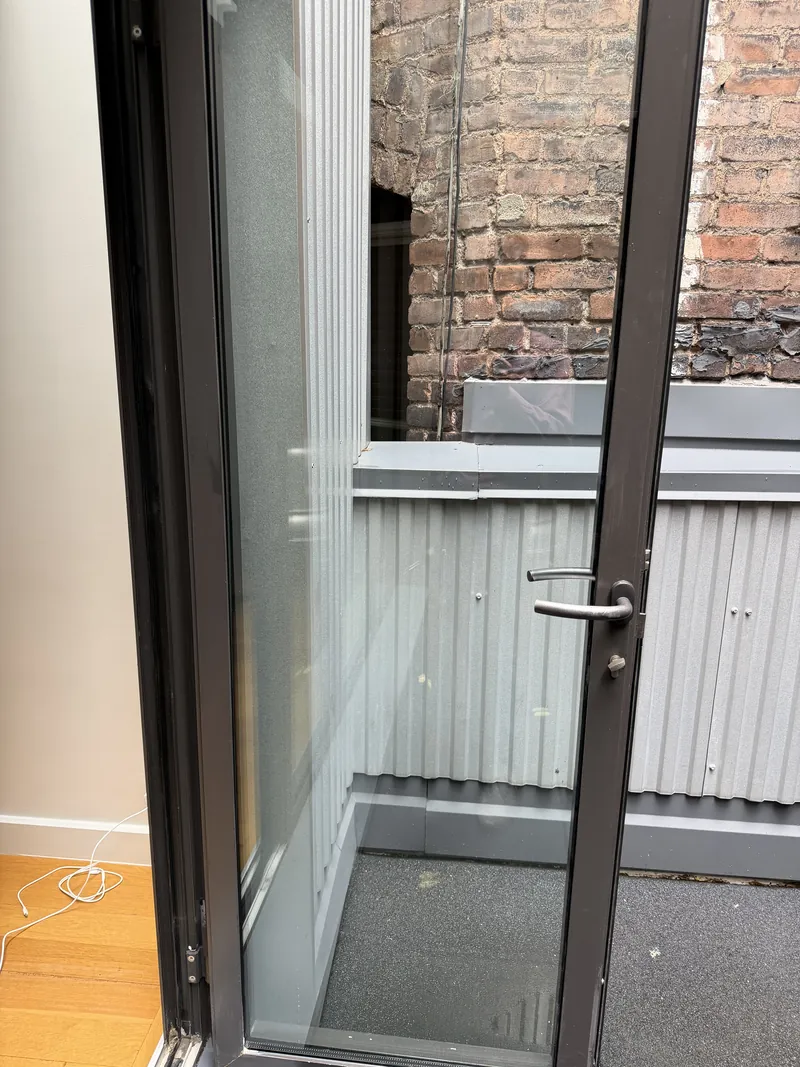
A multipoint lock is a set of parts that work together inside the edge of the door:
- The gearbox (also called the lock case) sits behind the lever and cylinder. It turns the movement of the handle or key into the movement of the locking points.
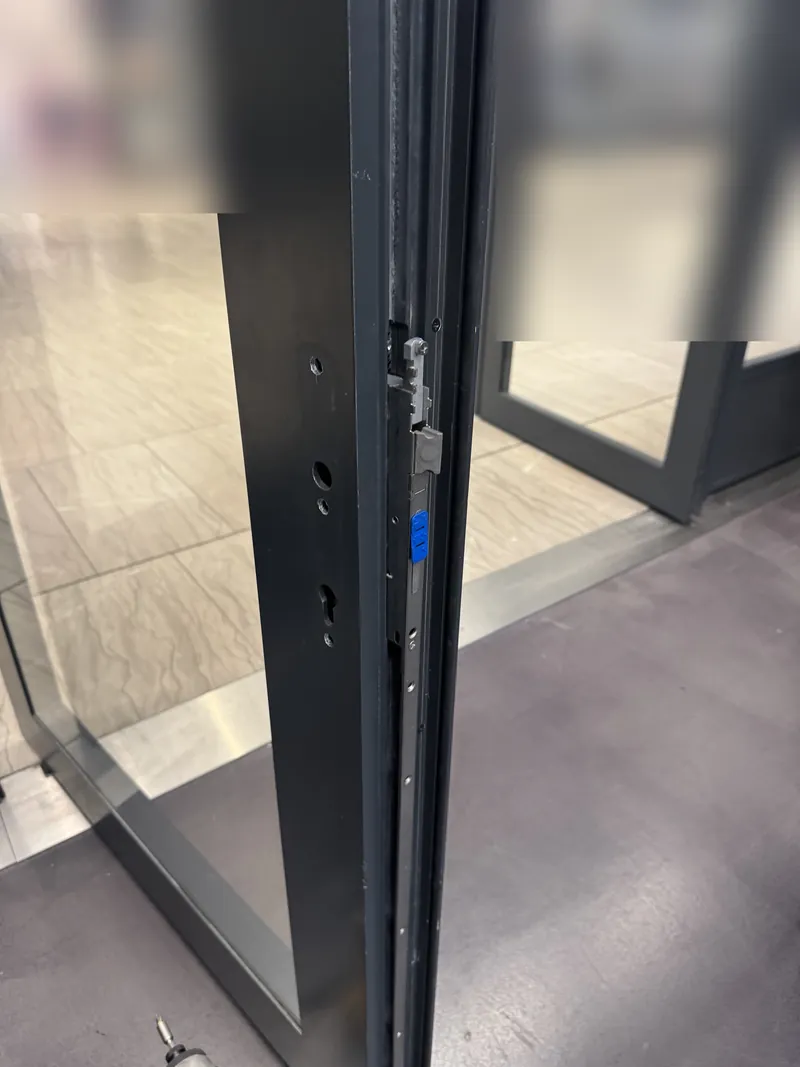
- The faceplate and drive rods run up and down the door edge from the gearbox, carrying that movement to the top and bottom.
- The locking points: a latch, plus rollers, hooks or bolts along the edge, and on many doors bolts that shoot into the head of the frame and the threshold.
- The keepers on the frame that each locking point engages.
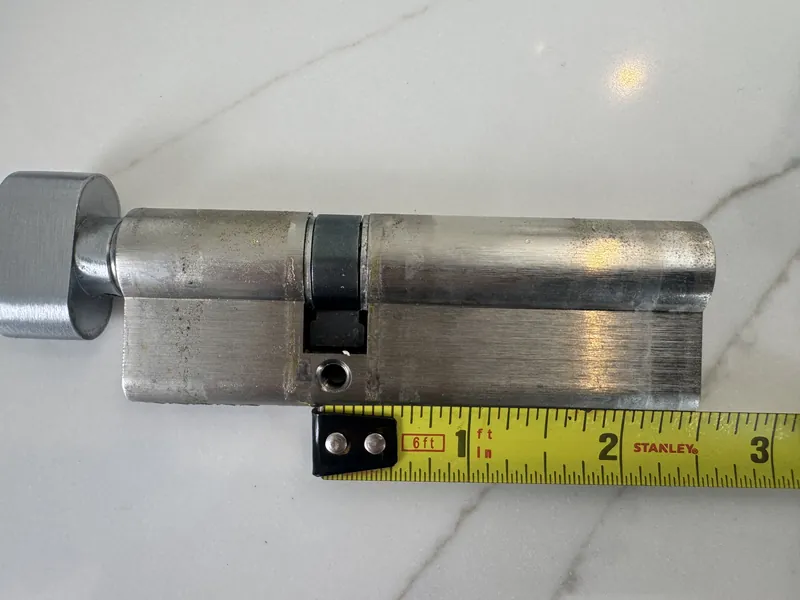
- The cylinder, usually a European profile cylinder (euro cylinder) that slides through the gearbox and is held by one screw.
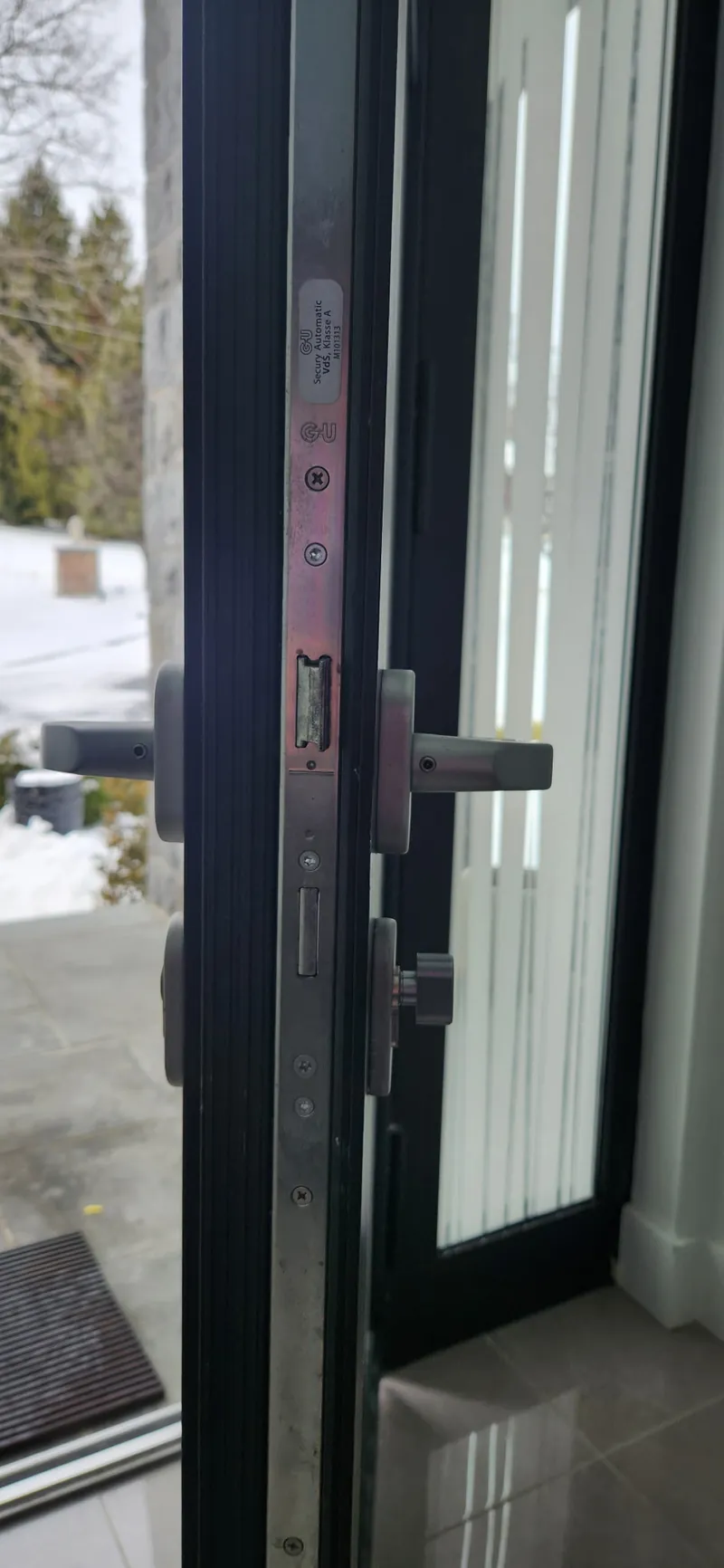
Because the whole system is concealed in the door, nobody thinks about it until it stops working. That is the problem this article is about.
Three choices to make when you order the doors
1. Automatic or manual locking
Automatic locks engage their locking points by themselves when the door closes. You do not have to remember to lift the lever or turn the key, so the door is never left closed but unlocked. The tradeoff is that someone who steps out onto a balcony and lets the door close may not be able to get back in, depending on the outside trim. Check exactly how the door opens from the outside before choosing automatic for a balcony.
Manual locks need a deliberate action, usually lifting the lever to throw the locking points and then turning the key or thumbturn. They are simpler and forgive a door that is opened and closed all day, but they only protect the opening if someone remembers to lock it.
2. Double cylinder or thumbturn
A double cylinder needs a key on both sides. In high-floor apartments with small children, owners often choose it so a child cannot open a balcony door alone, and it also stops someone who breaks the glass from reaching in and turning a knob.
A thumbturn cylinder has a key outside and a turn knob inside. It is the usual choice for backyard, patio and terrace doors that people use all day and may need to leave through quickly.
3. The type of locking points
Multipoint locks use three main kinds of locking points, and many doors combine them:
- Latches hold the door closed, like an ordinary lock, and are retracted by the lever.
- Rollers and hooks along the door edge pull the door tight against its weatherstripping and resist the door being pried away from the frame.
- Shootbolts slide out of the top and bottom of the door into the frame head and the threshold or floor.
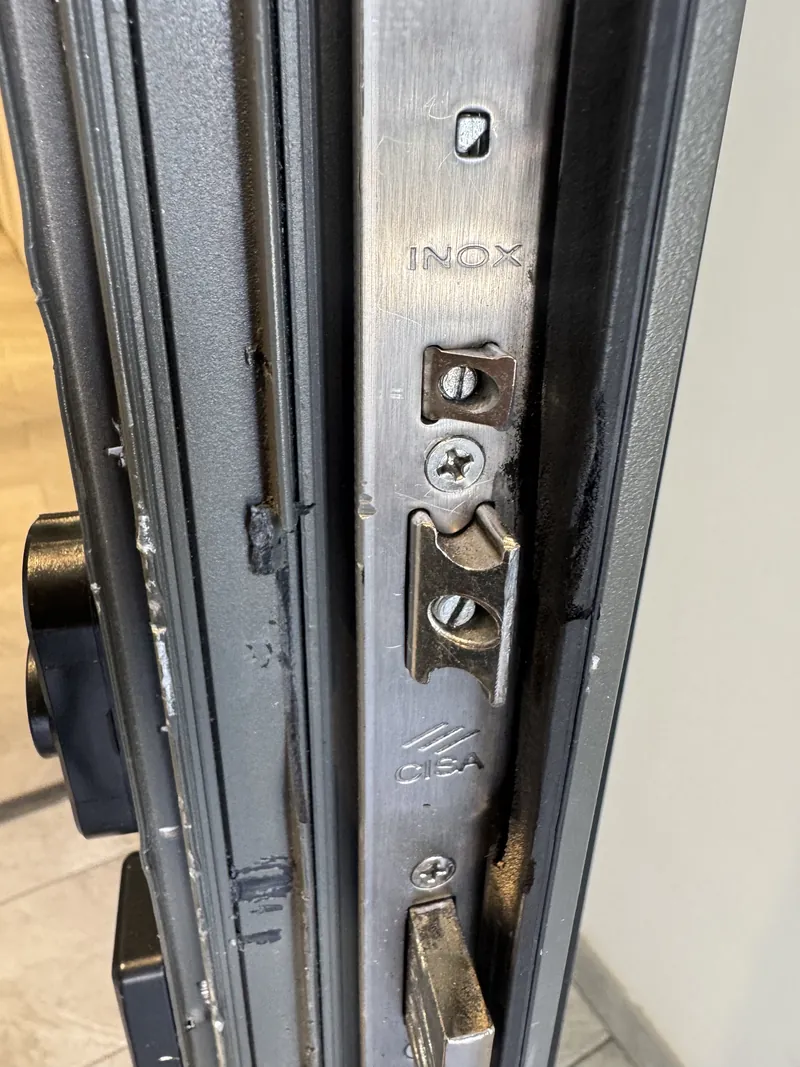
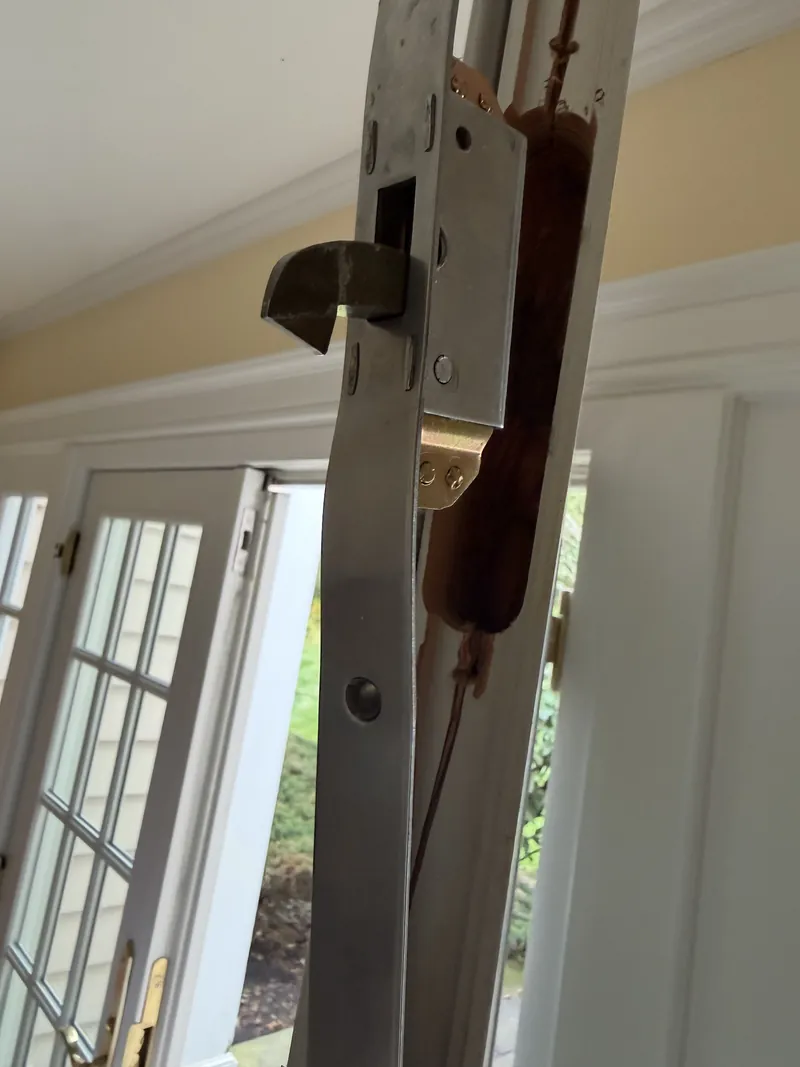
More locking points mean a stronger, better-sealed door. They also mean more parts that have to line up every time the door is locked, which matters for the next section.
Who makes multipoint locks, and what parts cost
Most aluminum balcony and terrace doors installed by GCs and door fabricators in New York use hardware from European manufacturers. Wood and clad patio doors from US manufacturers usually come with the manufacturer's own branded hardware.
G-U (Gretsch-Unitas), Germany
G-U traces its history to 1907 and is a family-owned group based in Ditzingen, Germany. Its brands include G-U for door and window hardware and multipoint locks, BKS for locks and cylinders, and FERCO for window and door fittings, which is why US parts sellers list many of its locks as "G-U/FERCO" (G-U company information (opens in a new tab)). G-U locks are common on European-style aluminum and wood doors in the US, and replacement parts are widely stocked.
HOPPE, Germany
HOPPE is a family-owned German group founded by Friedrich Hoppe and now led by the third generation of the family, with about 2,300 employees worldwide. It is best known for door and window handles (HOPPE leadership change, Interempresas (opens in a new tab)). Its HLS 9000 multipoint locks come in many versions: manual or automatic, with tongues, rollers or swing hooks, and in several backsets. Parts are sold by part number, so you need the exact model.
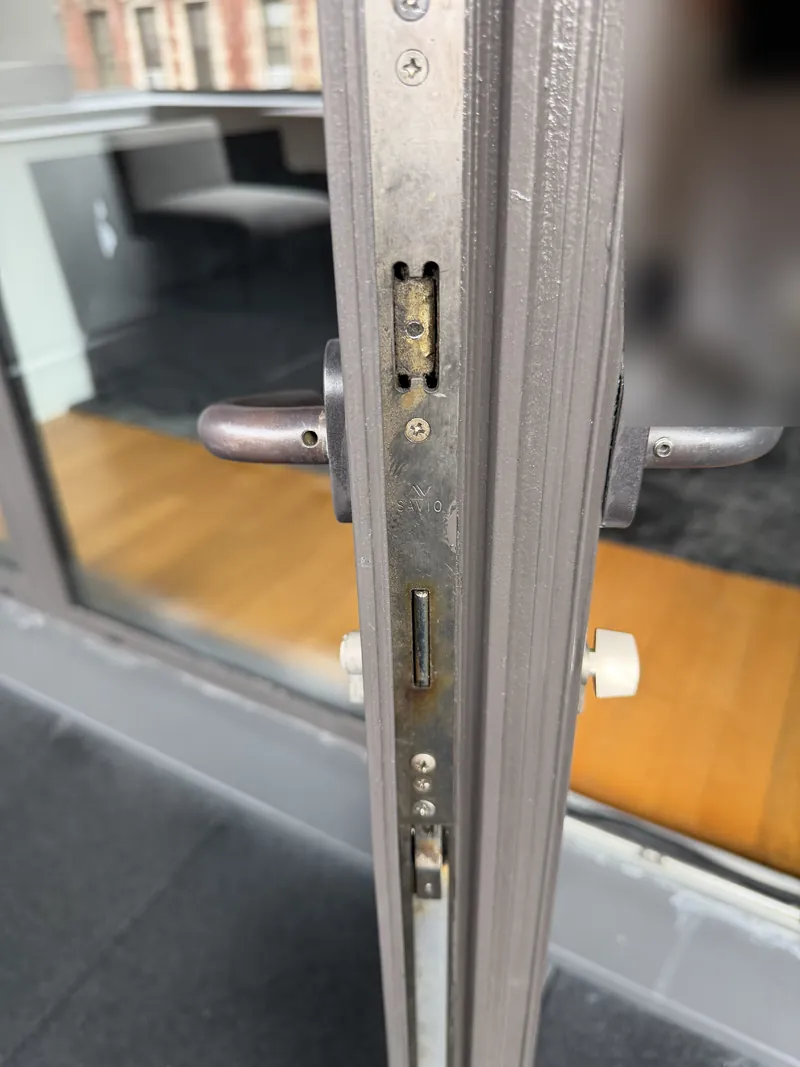
Savio, Italy
Savio was founded by Luigi Savio in 1889 in Chiusa di San Michele, near Turin, and makes hardware for aluminum and multi-material windows and doors, sold in more than 50 countries (Savio company history (opens in a new tab)). In North America it is represented through Savio Thesan USA. Some Savio replacement gearboxes are special-order items with several weeks of lead time.
Marvin and Andersen, United States
Marvin, a family-owned company founded in Warroad, Minnesota in 1912 (Marvin history (opens in a new tab)), and Andersen both sell hinged patio and French doors with their own multipoint hardware. Andersen sells replacement lock mechanisms through its own parts store (Andersen parts (opens in a new tab)). Marvin has used several different multipoint systems over the years, so the door's age and series decide which part fits (parts supplier note on Marvin versions (opens in a new tab)).
What a full replacement costs
When a whole multipoint mechanism has to be replaced (gearbox, faceplate, rods, locking points and keepers), the bill is much higher than the price of a single part. In our experience, a full multipoint lock replacement from G-U, HOPPE, Savio, Marvin or Andersen costs well over $600 to $700, before any lockout, frame repair or emergency service. Tall doors, extra locking points, special finishes and parts shipped from Europe push it higher.
| Brand | Full replacement (our estimate) | What drives the cost |
|---|---|---|
| G-U (FERCO) | Over $700 | A complete Secury lock alone lists at $460–$740 |
| HOPPE HLS 9000 | Over $700 | Many versions; the exact part number has to be matched and ordered |
| Savio | Over $700 | Parts are often special order, non-returnable, with weeks of lead time |
| Marvin | Well over $700; usually the most expensive | Several lock systems over the years; lock body, concealed rods and keepers are sold separately |
| Andersen | Over $700 | The 400 Series active mechanism alone lists at about $295–$320 |
Individual parts prices
If only the gearbox or the cylinder has failed and the rest of the mechanism is sound, replacing that one part costs less. These are hardware-only prices from retailer listings in October 2026, before labor. Size, finish, backset and seller change the price. Links are under Price references.
| Part | Approximate price | Notes |
|---|---|---|
| G-U (FERCO) replacement gear unit | $160–$230 | Gear only; the faceplate, rods and locking points stay in the door |
| HOPPE HLS 9000 gear unit | $200–$450 (our estimate) | Sold by part number; match backset, handle height and lock type |
| Savio 56-721SS three-point gearbox | $270–$355 | Often special order, non-returnable, three to four weeks |
| Marvin Ultimate active lock body | $140–$210 | Lock body only; concealed rods sold separately |
| Andersen 200 Series active lock | About $170 | From Andersen's parts store |
| Euro profile cylinder | $40–$150 (our estimate) | Thumbturn or double cylinder; higher-security cylinders cost more |
Even a full replacement is not the worst case. What costs the most is getting a locked door open when the mechanism has failed, and waiting for a replacement that has to come from Europe.
Why a failed multipoint lock is an expensive lockout
With an ordinary lock, a locksmith can usually pick or bypass the cylinder, or drill it, and the door opens. A multipoint lock is different. When the gearbox breaks, turning the key or the cylinder no longer moves the locking points. The door stays locked at the top, middle and bottom, and nothing on the outside of the door will release it.
The worst case is when a top or bottom shootbolt or hook stays engaged. The only way in is often to cut into the door or frame to reach the rod or the locking point, and because the mechanism is hidden, the technician often has to estimate where it is. The door may need new hardware, frame repair and refinishing afterward.
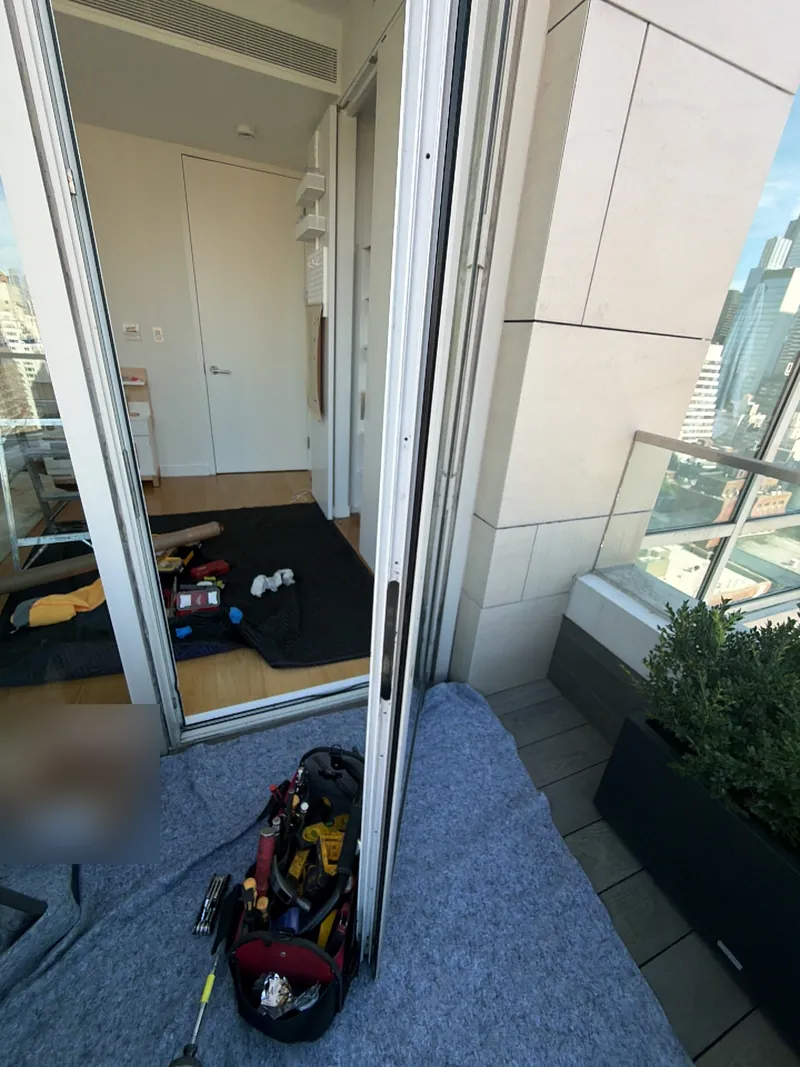
In our experience, a lockout followed by replacement of the multipoint mechanism can easily cost over $3,000, and that assumes the parts are still available. That is several times the cost of a planned replacement.
Why gearboxes fail
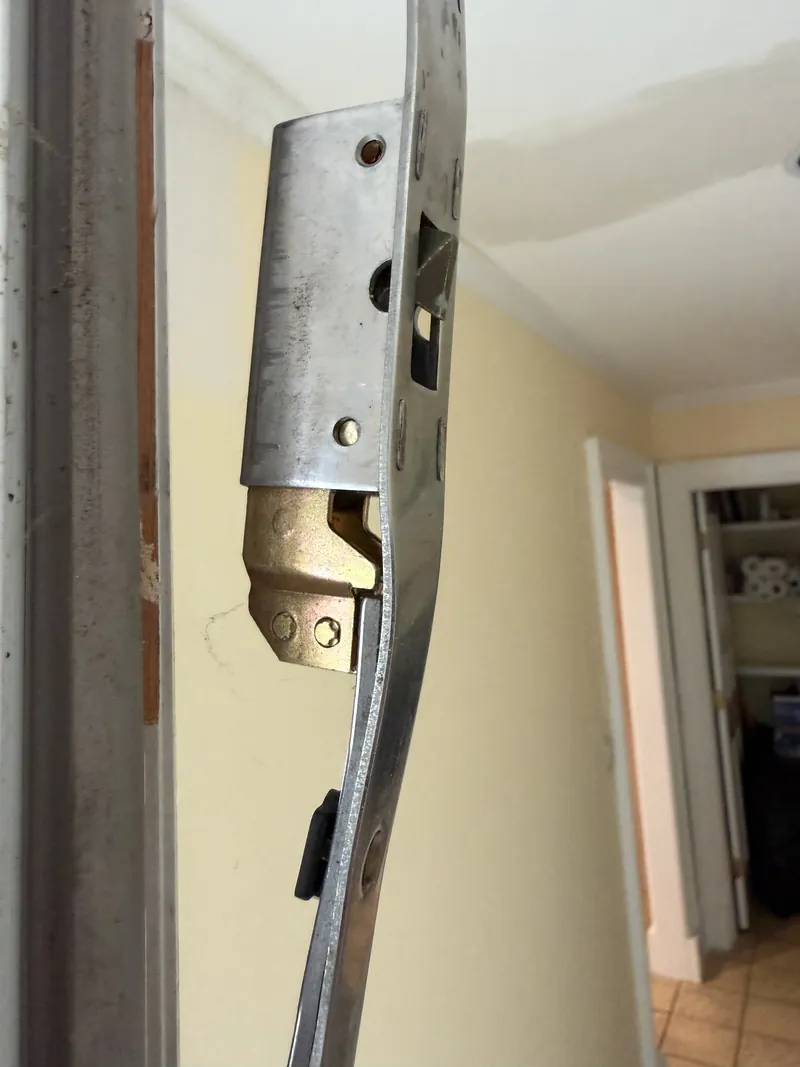
Inside most gearboxes, the cylinder's cam turns a plastic part, which moves the metal slides that drive the locking points. That plastic part is the weak point.
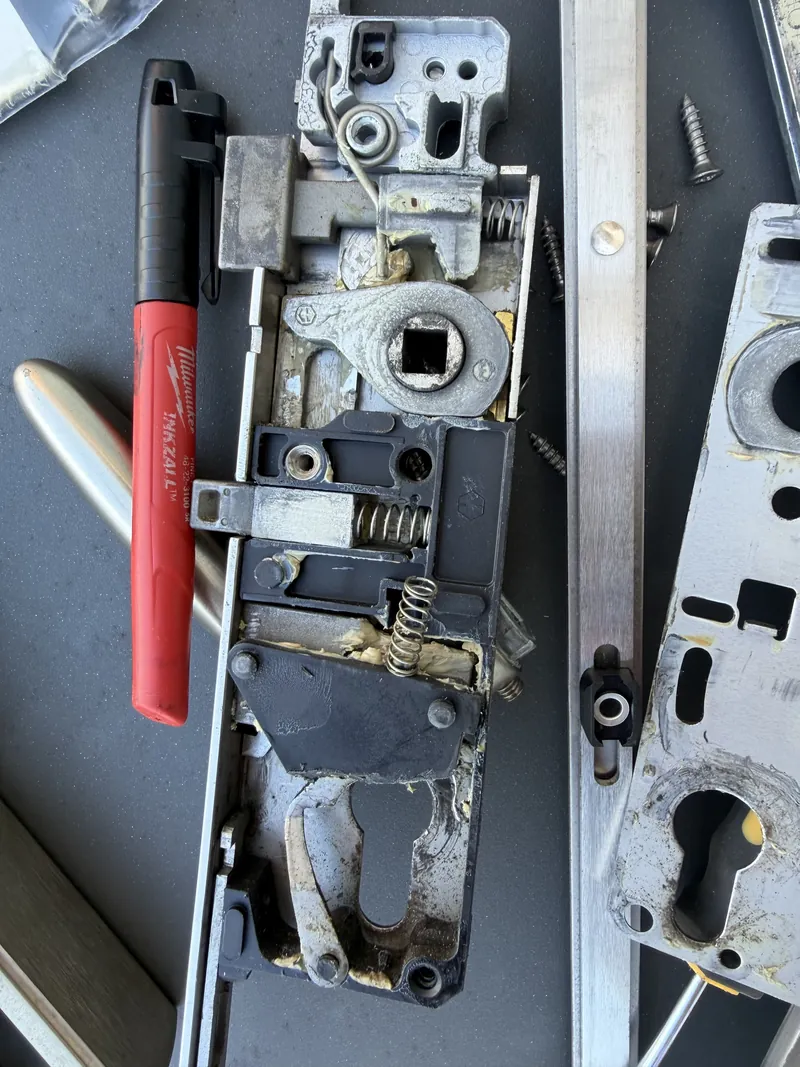
It breaks the same way almost every time:
- A shootbolt is blocked by dirt, debris or ice in its hole in the threshold or frame head.
- The door is not fully closed, or has dropped, so the hooks and rollers do not line up with their keepers.
- Someone feels the resistance and turns the key or thumbturn harder.
The cylinder is steel and the locking points are steel. The plastic part in between gives first. If the door is locked when it breaks, you have the lockout described above.
How to prevent it
- Close the door fully before lifting the lever or turning the key.
- If the key or lever resists, stop. Open the door, check what is blocking the locking points, and try again.
- Keep the shootbolt holes in the threshold and frame head clear of dirt, leaves and ice.
- Have the door and keepers adjusted when it starts to drag, rub or need a push to lock.
- Lubricate the locking points and keepers as the manufacturer recommends, usually once or twice a year.
- Tell residents and staff why forcing the key is expensive.
For more on seasonal care, see our winter maintenance checklist for locks and entrance hardware.
Choosing a brand: price is not the whole cost
It is natural to compare doors and hardware on the price per opening. But think about how many of these doors the building will have, and for how long.
A Manhattan residential tower of 60 or 70 stories, with more than one balcony door per apartment, can have hundreds of multipoint locks. Some of them will fail. The same is true for a retailer with the same storefront door at many locations. Every failure is a service call, and some will be lockouts.
When you compare brands, compare these as well as the price:
- Can replacement gearboxes and locking points be bought in the US, and from more than one supplier?
- How long does a replacement part take to arrive?
- Will the same model still be available in ten years, or will the replacement need a different faceplate and new cutouts in the door?
- Can a gearbox be replaced alone, without replacing the whole faceplate and rods?
A lock that costs more per door but can be repaired the same week with a stocked part is usually the cheaper choice over the life of the building.
Before you buy: spare parts and warranty
Whether you are the owner, the property manager or the GC, settle these before the doors are ordered:
- Buy spare parts with the doors: at least one gearbox for each lock model and handing, plus cylinders.
- Ask the GC or supplier how long the warranty period is, what it covers, and whether it includes labor.
- Ask how replacement parts will be obtained after the warranty ends, and from whom.
- If you buy doors complete with locks, find out where the individual lock parts can be purchased if one is damaged and needs replacing.
- Get the manufacturer, model and part numbers of the multipoint lock, gearbox and cylinders in writing, in the closeout documents.
Avoid no-name replacement gearboxes
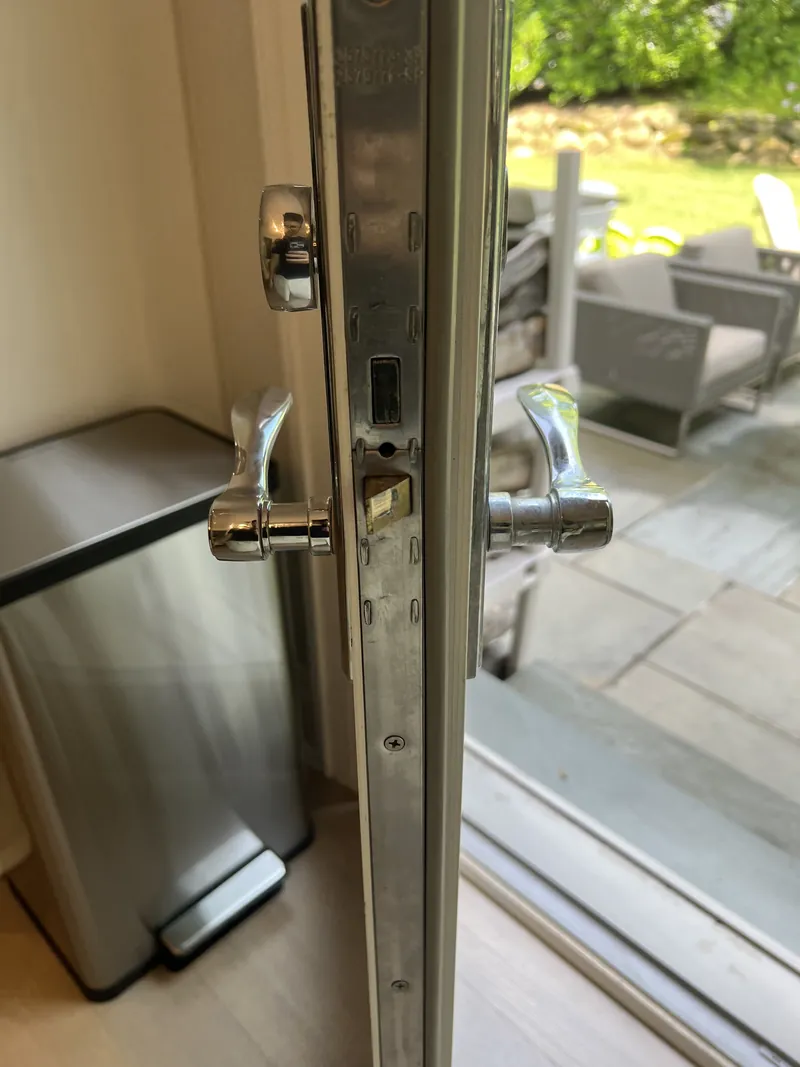
Online marketplaces, including Amazon, are full of unbranded replacement gearboxes that claim to fit many doors at a fraction of the price of the original part.
We advise GCs and owners not to install them. In our experience they are cheaply made and break, and when they break the door locks you out exactly like the original failure, except now it happens sooner. A gearbox that almost fits can also leave the locking points short of full engagement, so the door looks locked but is not.
If the original part is no longer made, ask a lock specialist for a branded replacement designed for that faceplate, or for a full conversion kit.
Replacing a multipoint mechanism: measure everything
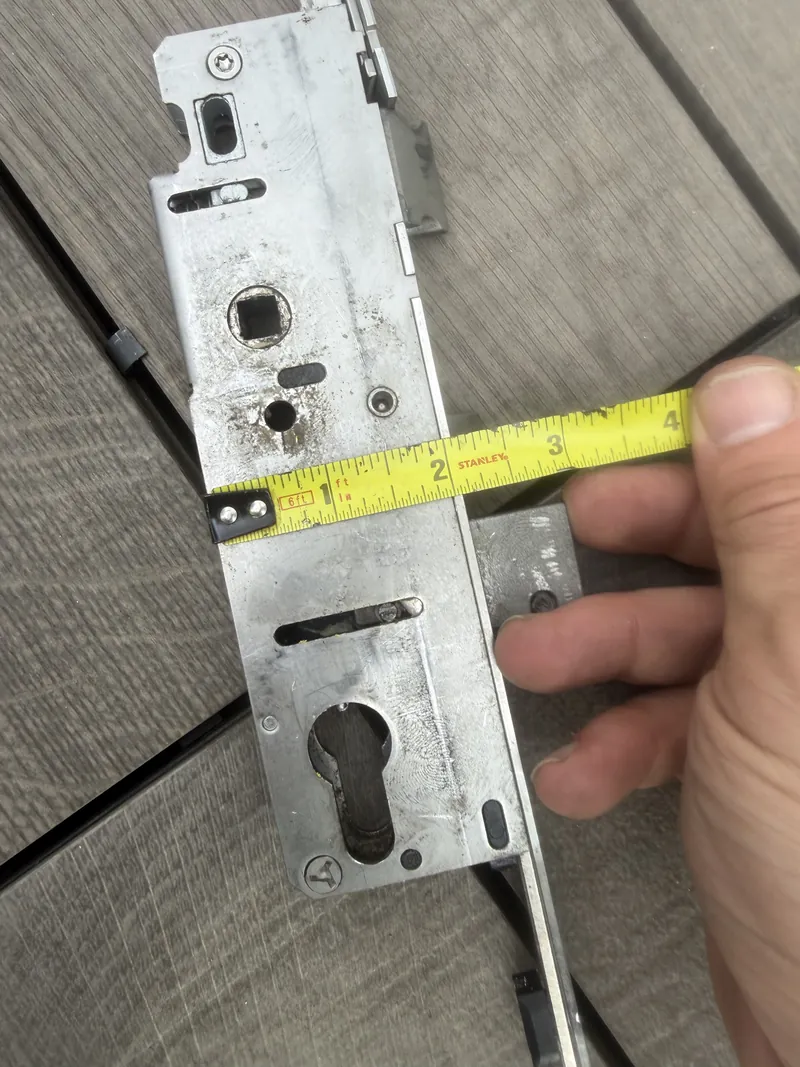
There are many variations in multipoint models and configurations, even within one brand. Before you order a replacement, take exact measurements of the door, the gearbox and the locking points.
Record at least:
- Backset: from the door edge to the center of the handle spindle, typically 25 to 60 mm.
- Center distance: from the handle spindle to the center of the cylinder hole, often listed as "PZ," for example 85 or 92 mm.
- Faceplate: width, thickness, total length and whether it is flat or U-shaped.
- Locking points: the type and the distance of each one from the center of the handle.
- Door height, and the handle height from the bottom of the door.
- Operation: automatic or manual, lever up to lock or key only, and the handing (left or right).
- Cylinder: the length on each side of the cam and whether it is double or thumbturn.
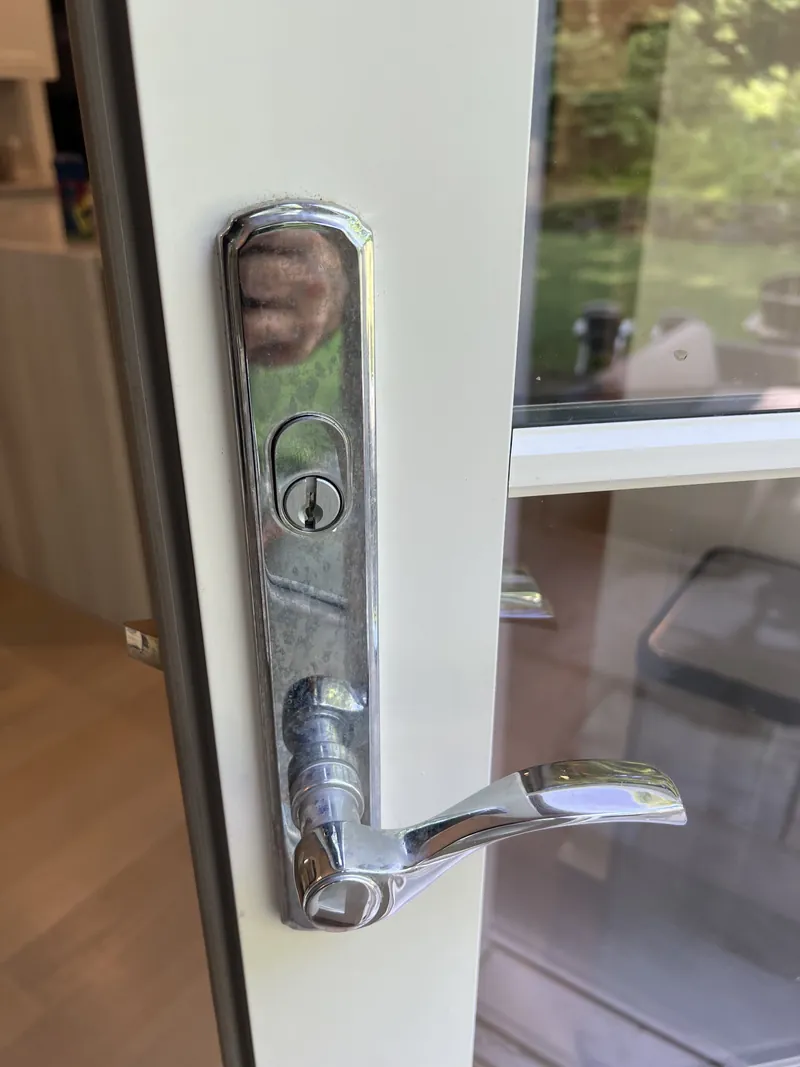
Photograph the faceplate, every stamp and label on it, and the trim on both sides before anything is removed.
The bottom line
Multipoint locks make balcony, terrace and patio doors secure and weathertight. They are also the hardest locks to open when they fail.
Choose the options that fit how each door is used, pick a brand you can get parts for, buy spares, record the part numbers, and teach people not to force the key. Those steps cost little compared with one lockout.
Contact EntryPoint Security to review multipoint hardware on your project or repair a door that will not lock or open. For urgent lockouts, see our emergency service.
Price references
Retailer and manufacturer pages behind the approximate prices above. UK cylinder prices were converted to an estimated US range.
- G-U (FERCO): All About Doors (opens in a new tab), Golden Locks (opens in a new tab)
- HOPPE HLS 9000: Window and Door Parts (listed by part number) (opens in a new tab)
- Savio 56-721SS: Golden Locks (opens in a new tab), Window and Door Parts (opens in a new tab)
- Marvin Ultimate active lock body: Golden Locks (opens in a new tab), Window Parts World (opens in a new tab)
- Andersen hinged patio door locks: Andersen 400 Series active lock (opens in a new tab), Andersen 200 Series active lock (opens in a new tab)
- Euro profile cylinders (UK prices): EVVA (opens in a new tab), ABUS (opens in a new tab)
Sources
- G-U: company information (opens in a new tab)
- Interempresas: generational change at HOPPE (in Spanish) (opens in a new tab)
- Savio: company history (opens in a new tab)
- Marvin: history of Marvin (opens in a new tab)
- Andersen: replacement parts store (opens in a new tab)
- MP Locks: Marvin multipoint lock hardware (opens in a new tab)
This article is provided for general educational purposes and does not constitute legal advice, professional engineering advice, or an official determination of code compliance. Requirements vary based on building occupancy, construction history, approved use, and individual door configurations. Building owners should consult qualified professionals and applicable authorities before undertaking regulated work.