Which NYC rules apply to building entrances
People often say "fire code" for every rule about doors, but a building entrance in New York City is usually governed by several overlapping rules, enforced by different agencies. Which ones apply to your door depends on the building's occupancy classification, when it was built or last altered, and how the door is used.
| Rule | Who enforces it | What it covers for entrance doors |
|---|---|---|
| NYC Building Code (2022), Chapter 10 | Department of Buildings (DOB) | Design of the means of egress for new construction and alterations: door operation, locks and latches, electric locking, panic hardware, and Group R-2 entrance security (§1010) |
| NYC Fire Code, Chapter 10 | Fire Department (FDNY) | Maintenance of the means of egress in existing buildings: exits kept unobstructed, door hardware kept in good working order (FC 1027) |
| Housing Maintenance Code (Admin. Code Title 27, Ch. 2) | Housing Preservation and Development (HPD) | Owner duties in residential buildings, including maintaining self-closing doors (§27-2041.1) and apartment door locks (§27-2043) |
| Admin. Code §28-315.10 | DOB and HPD | Retroactive requirement for self-closing, self-latching doors to corridors and stairs in Group R-1 and R-2 buildings |
| NYS Multiple Dwelling Law §50-a | State law, enforced locally | Self-closing, self-locking entrance doors and intercoms in Class A multiple dwellings |
| DOB rule 1 RCNY §42-01 | DOB | Entrance doors, locks and intercom systems in Class A multiple dwellings with eight or more apartments |
The 2022 NYC Construction Codes apply to applications filed with DOB on or after November 7, 2022. Which rules apply to an existing building depends on its construction and alteration history, and some requirements, such as the self-closing door rule, apply regardless of a building's age. Two buildings on the same block can have different obligations for similar-looking doors.
The Fire Code adds a maintenance duty that applies regardless of construction date. FC 1027.3.1 states that "door hardware and other devices and physical components of the means of egress shall be maintained in good working order at all times," and FC 1027.3.2 makes security devices affecting the means of egress subject to the approval of the Commissioner of Buildings in consultation with the Fire Department.
Why compliance matters
Building safety
Entrance and corridor doors do two jobs that can pull against each other: they keep intruders out, and they must let occupants out fast during a fire. When hardware fails, it usually fails one of those jobs. A door that does not close and latch lets smoke travel through a building. A door that cannot be opened from inside in a single motion can slow evacuation.
The January 2022 Twin Parks fire in the Bronx killed 17 people. According to the City Council (opens in a new tab), the fire was caused by a space heater and the deaths were from smoke inhalation, and a Council Member sponsoring the follow-up legislation said that "had the self-closing doors worked, smoke wouldn't have filled the 19-story tower."
Violations and correction deadlines
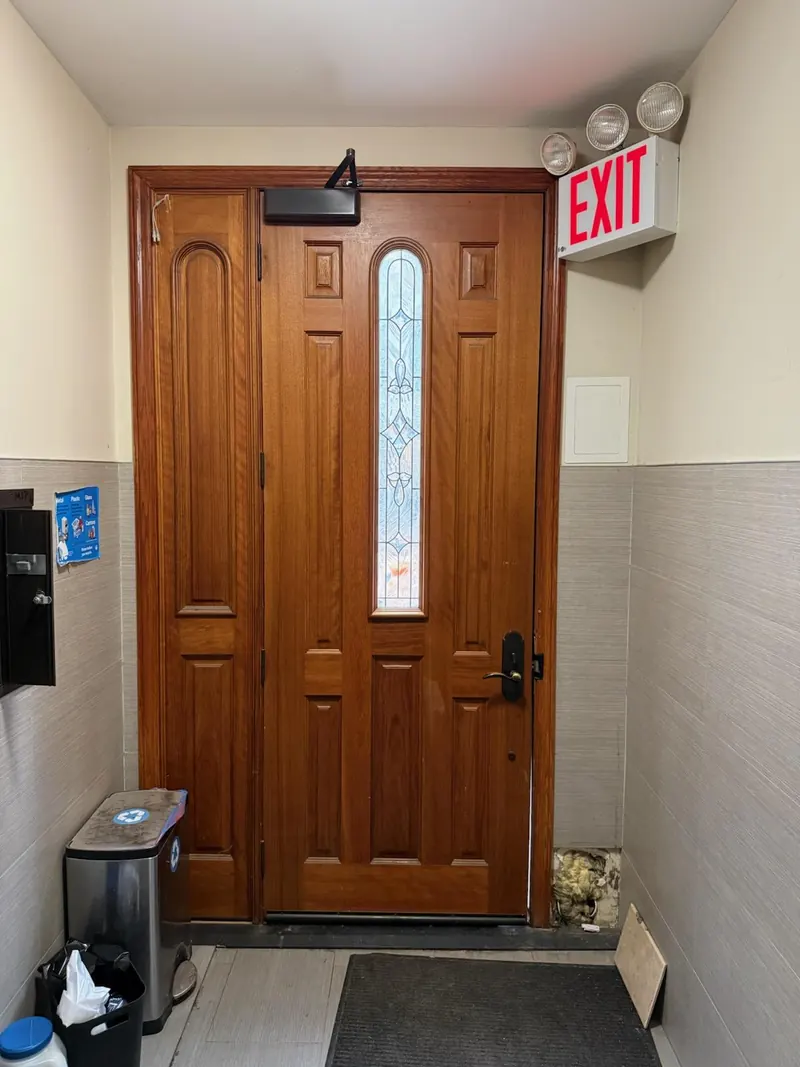
HPD treats a failure to maintain required self-closing doors as a class C "immediately hazardous" violation. Under Local Law 63 of 2022 (opens in a new tab), the owner must correct it within 14 days of service of the notice of violation, and HPD must reinspect within 20 days after that period, regardless of any certification of correction. If repairs aren't made, HPD may perform emergency repairs and bill the cost to the property, and may seek civil penalties in Housing Court (HPD (opens in a new tab)).
Financial penalties
- Self-closing door violations: a civil penalty of $250 to $500, plus $250 per day from the correction date until the violation is corrected (Admin. Code §27-2041.1, as amended by Local Law 63 of 2022).
- Falsely certifying that an immediately hazardous violation was corrected: an additional $500 to $1,000 per violation (Admin. Code §27-2115).
- Other immediately hazardous housing violations carry daily penalties that depend on building size (§27-2115).
DOB and FDNY can also issue their own violations, with separate penalties.
Potential legal liability
Door problems can also matter beyond fines, for example in insurance claims or lawsuits after an incident. Ask your attorney and insurer how this applies to your building.
Emergency egress: doors must open from the inside
The general rule: NYC Building Code §1010.1.9
The starting point is simple. Under §1010.1.9 (opens in a new tab), "except as specifically permitted by this section, egress doors shall be readily openable from the egress side without the use of a key or special knowledge or effort." Door handles and other operating devices are generally installed between 34 and 48 inches above the floor (§1010.1.9.2).
Single-operation unlatching: §1010.1.9.5
Section 1010.1.9.5 states that "the unlatching of any door or leaf shall not require more than one operation." In practice, a person leaving should be able to open the door with one motion, such as pushing a bar or turning a lever, without first turning a separate deadbolt or sliding a bolt.
The 2022 code allows more than one operation only in limited locations:
- Places of detention or restraint.
- Where manually operated bolt locks are permitted by §1010.1.9.4 (for example, certain inactive leaves of door pairs).
- Doors from individual dwelling units and sleeping units of Group R occupancies, as permitted by §1010.1.9.3, Items 4 and 5. This is why an apartment door can have a separate deadbolt and chain guard while the building's exit doors generally cannot.
Electric locks on egress doors
The 2022 code permits electric locking of egress doors in several occupancies, including Group R-2, only under specific conditions:
- Sensor-released doors (§1010.1.9.8): a sensor on the egress side unlocks the door as an occupant approaches; loss of power unlocks it; a manual unlocking device marked "PUSH TO EXIT" is mounted 40 to 48 inches above the floor within 5 feet of the door and directly interrupts power to the lock, keeping it unlocked for at least 30 seconds; fire alarm, sprinkler or fire detection activation, where provided, unlocks it; and the locking system is listed to UL 294.
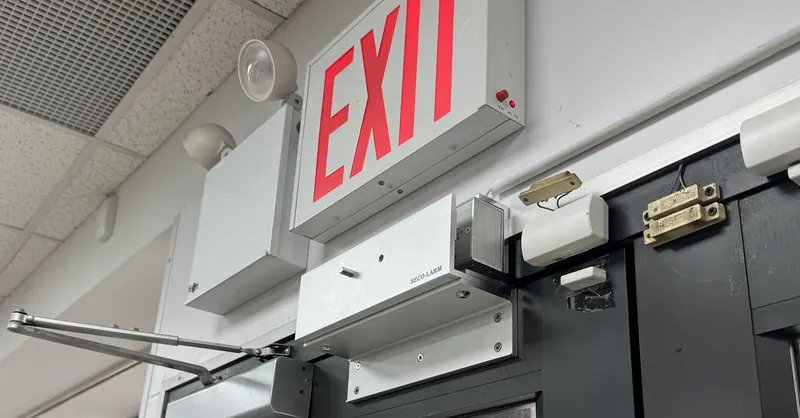
- Electromagnetically locked doors (§1010.1.9.9): the door leaf has hardware with a built-in switch that is obvious, operable with one hand in all lighting conditions, and directly cuts power to the magnetic lock; loss of power unlocks the door; where panic or fire exit hardware is required, operating it also releases the lock; and the system is listed to UL 294.
Panic hardware
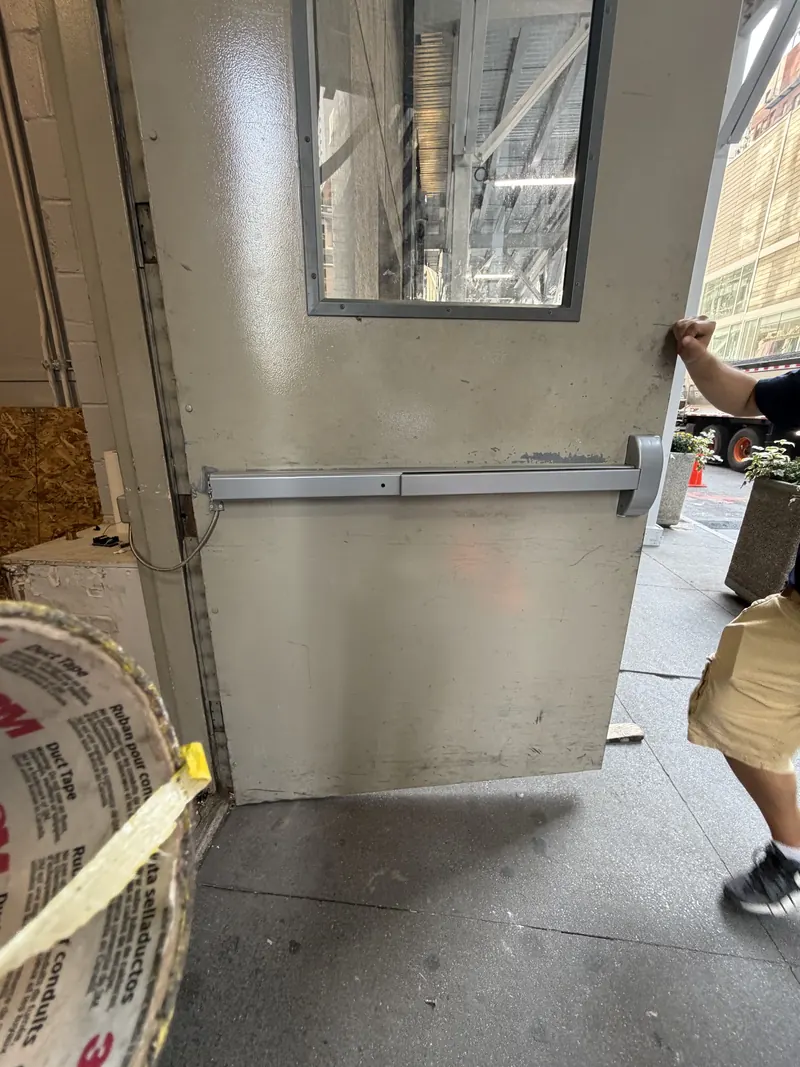
Section 1010.1.10 requires panic or fire exit hardware on doors serving certain occupancies and rooms, including Group H, Group A or E rooms with an occupant load of 75 or more, and certain electrical equipment rooms. Where installed, panic hardware must be listed to UL 305 (fire exit hardware to UL 10C and UL 305), its actuating portion must extend at least half the door width, and the unlatching force may not exceed 15 pounds. Many apartment building entrances are not required to have panic hardware, but owners often choose it because it gives one-motion egress by design.
Practical examples
- Potentially compliant
Exit device with an electric strike for entry
Residents enter by fob or intercom, which releases the strike. From inside, the push bar retracts the latch mechanically whether the strike has power or not.
- Potentially compliant
Maglock released by a listed exit bar with a built-in switch
Potentially compliant where the bar directly cuts power to the magnet, the lock releases on power loss, and the system is UL 294 listed (§1010.1.9.9).
- Potentially noncompliant
Separate deadbolt above the lever on an exit door
Turning the thumb-turn and then the lever is two operations. Outside the dwelling-unit exception, this generally conflicts with §1010.1.9.5.
- Potentially noncompliant
Maglock with only a motion sensor, or a button wired through the access panel
§1010.1.9.8 calls for a manual PUSH TO EXIT device that directly interrupts lock power. A button that only signals the controller, or no button at all, is a common inspection problem.
- Potentially noncompliant
Double-cylinder deadbolt, padlock, chain or surface bolt on an exit door
A key or special knowledge is needed to get out. Generally not permitted on required egress doors, apart from narrow exceptions.
- Depends on the building
Delayed-egress locks
Allowed only with special DOB review and approval in sprinklered or detector-protected buildings, and not in Group A, E, F or H occupancies (§1010.1.9.7).
Exterior keyed locks and entrance security in Group R-2 buildings
NYC Building Code §1010.4.1
New York City adds entrance security rules that the model code doesn't have. Section 1010.4 makes §§1010.4.1 through 1010.4.4 apply to Group R-2 occupancies (most apartment buildings). Section 1010.4.1 (opens in a new tab) provides that:
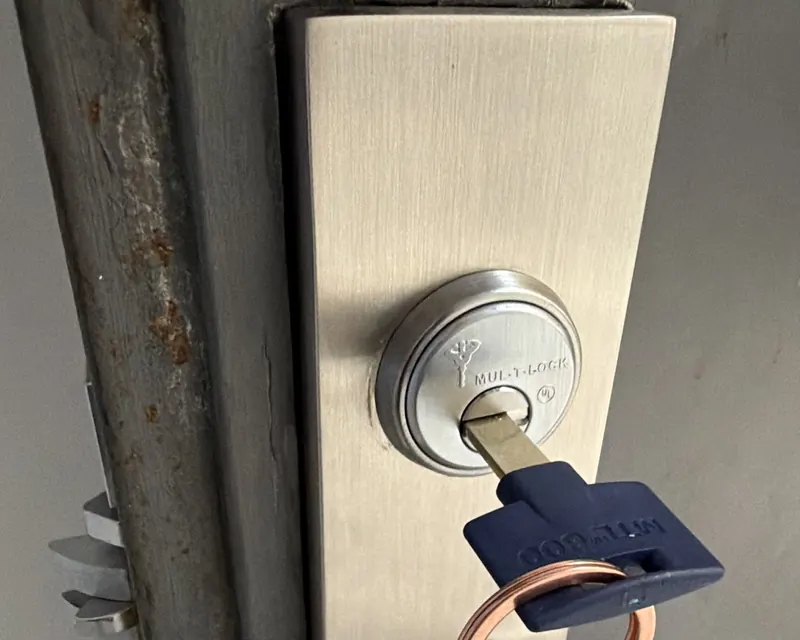
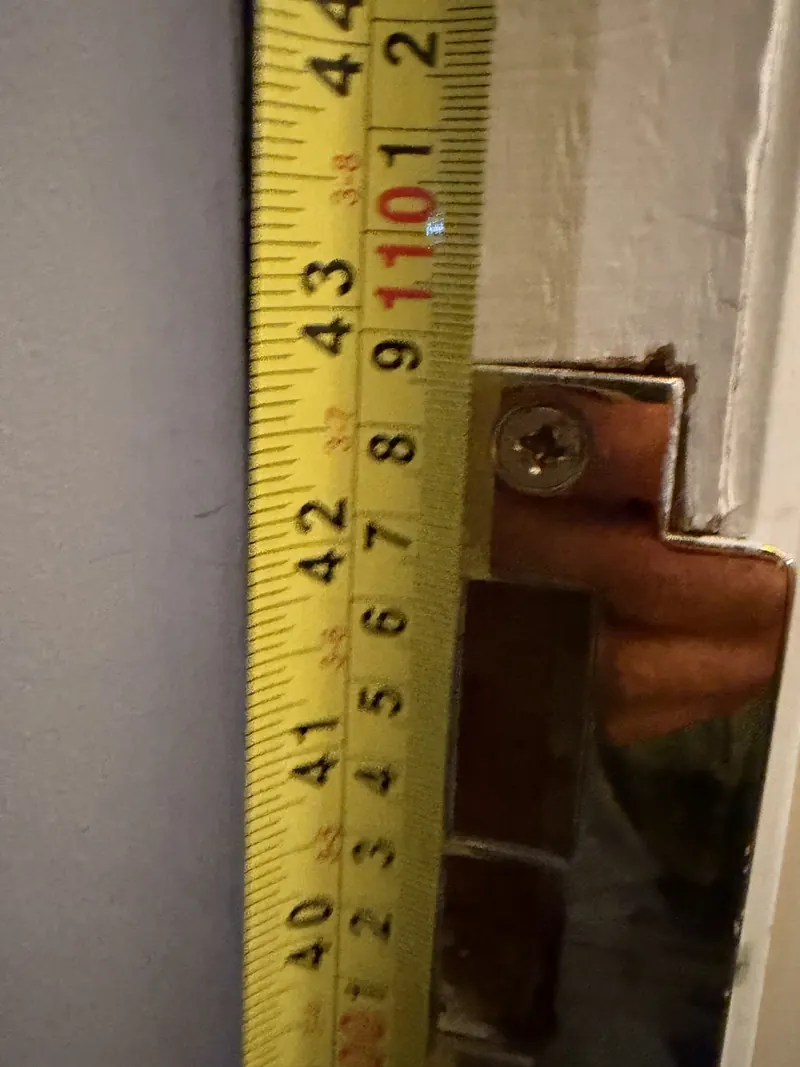
- Building entrance doors and other exterior exit doors shall have heavy-duty lock sets with auxiliary latch bolts, to prevent the latch from being manipulated by means other than a key.
- Latch sets shall have stop-work in the inside cylinder controlled by a master key only.
- Outside cylinders of main entrance door locks shall be operated by the tenants' key, which shall not be keyed to also open the tenants' apartment door.
- Lighting of at least 5 footcandles at floor level is required at or near the outside of the front entranceway, across its full width.
How access control fits in
Section 1010.4.1 is about entry: who can unlock the door from outside. Sections 1010.1.9 through 1010.1.9.9 are about egress: getting out from inside. A compliant entrance generally has to satisfy both. Access control and intercoms add a second way to unlock the door from outside; they don't replace the keyed lockset or change the egress rules.
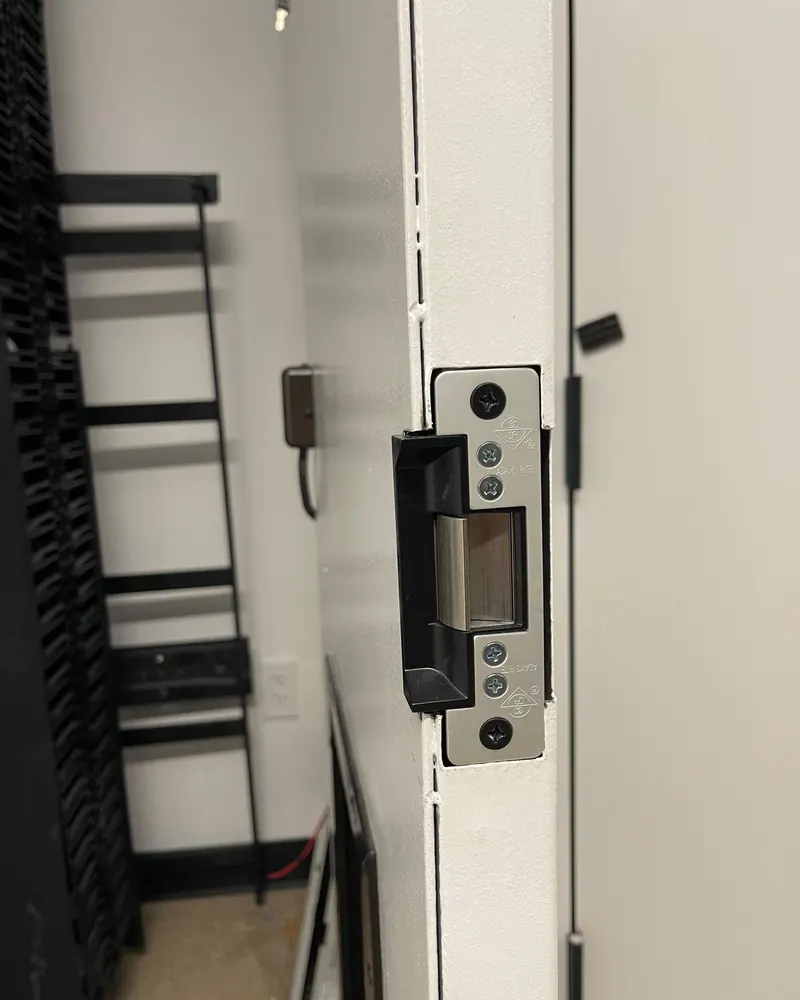
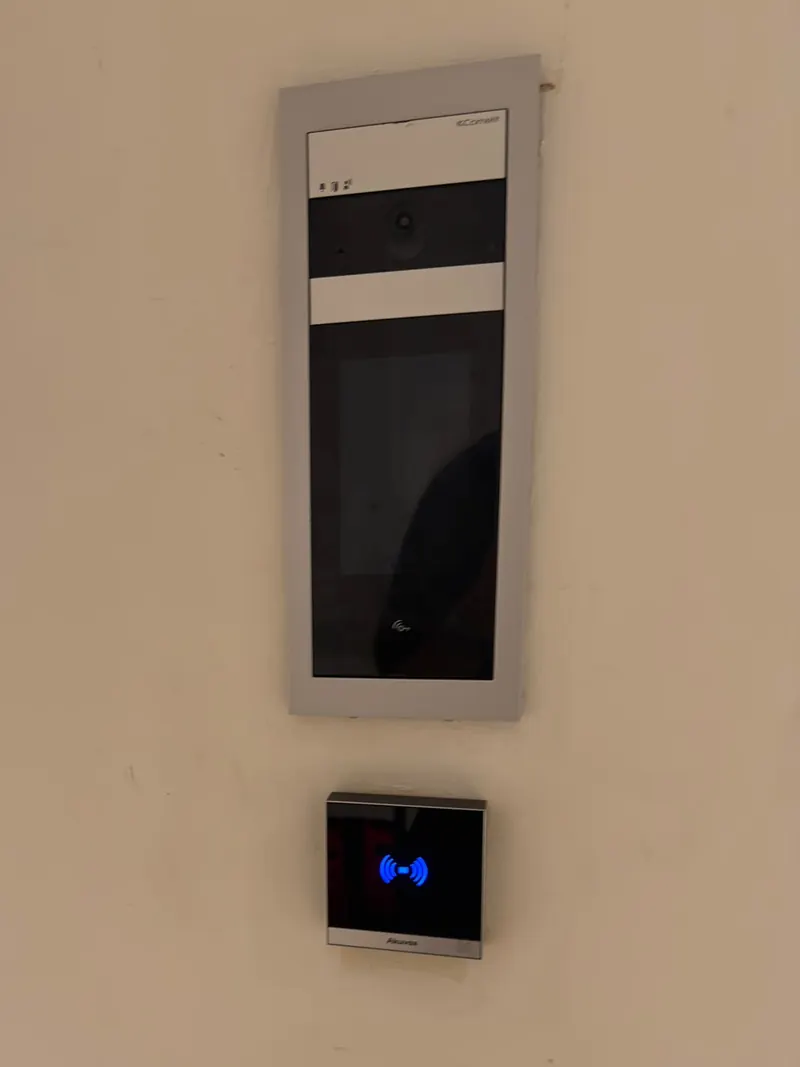
- Electric strike plus keyed lockset: the intercom or fob releases the strike, the tenant key still operates the lockset, and the inside lever or bar still opens the door mechanically. This arrangement is often used to keep a keyed lock while adding electronic entry.
- Magnetic lock as the only lock: if a maglock replaces the keyed lockset, the door may no longer have the heavy-duty keyed lock set that §1010.4.1 describes, and the maglock itself must meet the egress release conditions in §1010.1.9.8 or §1010.1.9.9.
Requirements by building size
Unit count is a useful starting point, but it is not the only factor. Requirements also depend on the building's occupancy group and Certificate of Occupancy, whether it is a Class A (permanent) or Class B (transient) multiple dwelling, when it was built or converted, whether recent alterations triggered current code, mixed uses on lower floors, and whether a full-time lobby attendant is present.
| Building | Typical classification | Entrance-related requirements that commonly apply |
|---|---|---|
| 1–2 units | Generally Group R-3, not a multiple dwelling | The R-2 entrance security rules in BC §1010.4 and the multiple-dwelling intercom rules generally don't apply. Egress doors must still open from inside, and rental units remain subject to applicable housing maintenance rules. |
| 3–7 units | Generally Group R-2 / Class A multiple dwelling | Self-closing, self-latching doors to interior corridors and stairs (Admin. Code §28-315.10; maintained under HMC §27-2041.1). Apartment doors with a key lock, heavy-duty latch set, deadbolt and chain guard (HMC §27-2043). For R-2 work under the 2022 code, keyed entrance locksets per BC §1010.4.1. Self-closing, self-locking entrance doors may be required depending on construction or conversion date (MDL §50-a). |
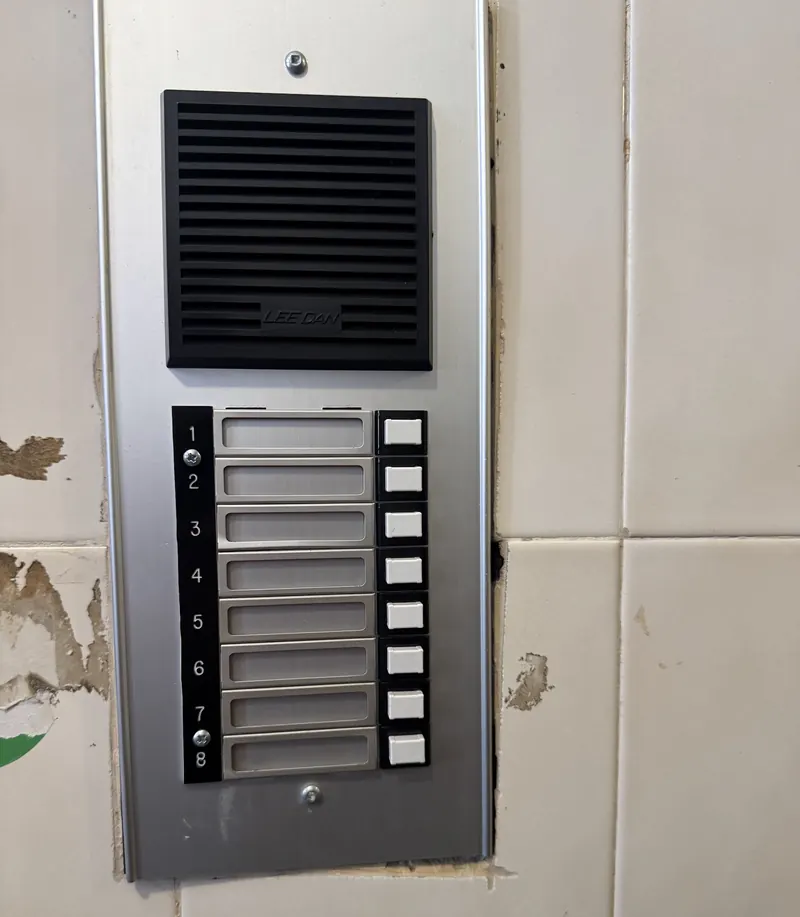
| 8+ units | Group R-2 / Class A multiple dwelling | All of the above, plus an intercom at the main entrance letting each apartment talk to a visitor and release the door lock (BC §1010.4.4; MDL §50-a; 1 RCNY §42-01). Entrances from the street, court, yard or cellar with automatic self-closing and self-locking doors, readily openable from inside without keys (1 RCNY §42-01). |
| Larger buildings | Group R-2, often with fire alarm systems | Sensor-released electric locks that unlock on fire alarm activation where a fire alarm is provided (BC §1010.1.9.8). Buildings with a full-time lobby attendant may connect intercoms to the attendant's station (§1010.4.4). Buildings with more than six units can be selected for HPD's proactive self-closing door inspections. |
Two details are easy to miss. The intercom rule in 1 RCNY §42-01 sets mounting heights: push buttons no more than 6 feet above the floor, and the speaking and listening device between 4 and 5 feet. It also requires every self-locking door to be "readily openable from the inside without the use of keys." Requirements for buildings built before 1968 can differ, so owners of older buildings should confirm their obligations with a code consultant.
Special considerations for homeless shelters
Shelters combine two needs that rarely meet in ordinary apartment buildings: staff must be able to reach residents quickly, and residents must always be able to get out. Several layers of rules apply.
Occupancy classification
The 2022 NYC Building Code lists homeless shelters among the congregate living facilities operated by a government agency or not-for-profit organization that are classified as Group R-1 (§310.3 (opens in a new tab)). For any particular shelter building, the Certificate of Occupancy and approved use determine which egress and security provisions apply.
Who oversees shelters
- The NYC Department of Homeless Services (DHS) (opens in a new tab) operates and contracts the city's shelter system.
- The New York State Office of Temporary and Disability Assistance (OTDA) regulates shelters. Operators of shelters for adults, small-capacity shelters and shelters for adult families are subject to OTDA's jurisdiction under 18 NYCRR Part 491 (opens in a new tab); facilities for homeless families that fall within its scope are covered by 18 NYCRR Part 900 (opens in a new tab).
- DOB and FDNY rules on egress and fire safety still apply to the building itself.
The New York City Housing Authority (NYCHA) is the city's public housing authority. It is not the general regulator of homeless shelters.
What the state shelter regulation says about exits and locks
18 NYCRR §491.18 (opens in a new tab) includes these requirements for adult shelters:
- At least two means of egress from each floor used by the public or housing 11 or more residents. Each must be remote from the other, open in the direction of exit travel, have panic (quick-release) hardware and a self-closing device, and be kept clear and freely accessible at all times (§491.18(b)(4)).
- Chain locks, hasps, bars and furniture may not be used in a way that would inhibit access to an exit or the free movement of residents (§491.18(d)(1)).
- Residents may secure the doors of their sleeping units, provided those doors can be unlocked from the outside by facility attendants, employees or security staff at all times (§491.18(d)(2)).
Staff access versus emergency egress
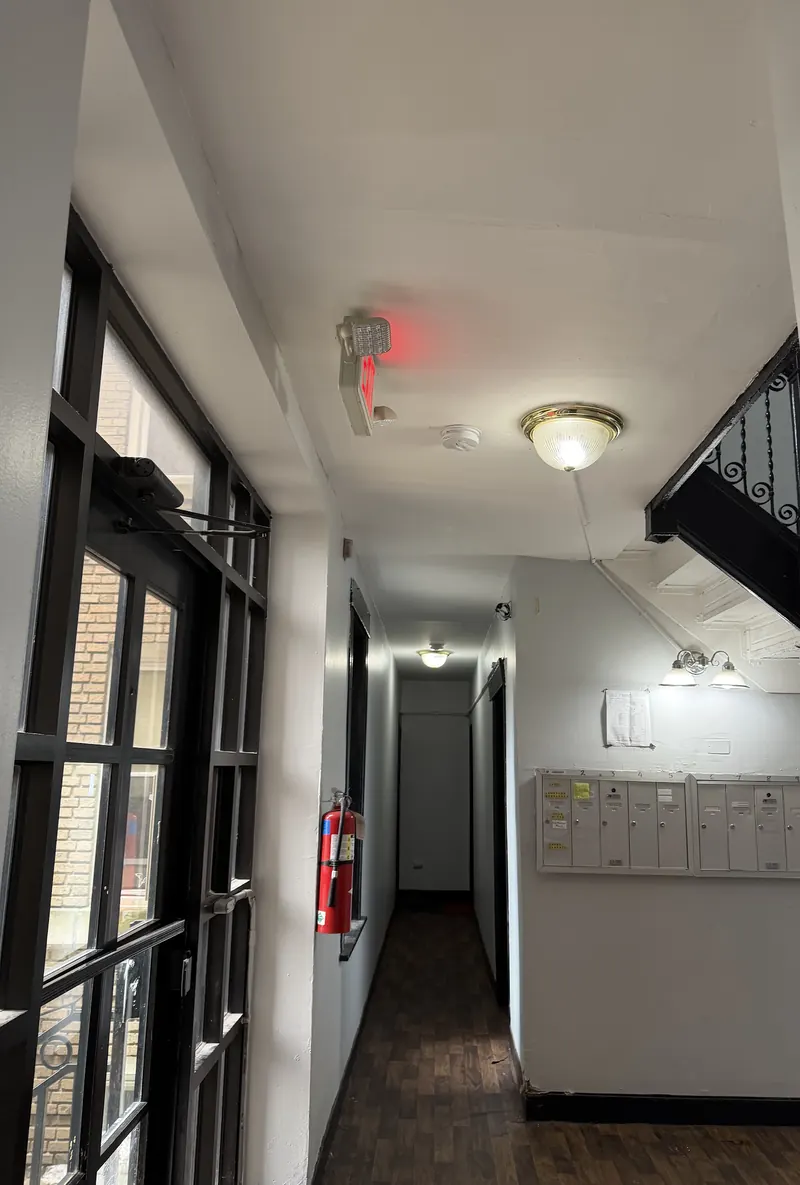
These are different directions of travel. Staff access is about opening a door from the corridor side, with a key, credential or override, to reach a resident. Emergency egress is about anyone opening the door from the inside without a key or special knowledge. A lock function that gives staff a key override from outside while keeping free egress from inside can address both; a lock that traps an occupant inside, or blocks staff from reaching them, addresses neither. Electric locking on shelter exits is subject to the same release conditions as other buildings, plus any approvals the operator's regulators require.
Common locking configurations, explained
No piece of hardware is compliant or noncompliant on its own. What matters is how it is combined, wired and maintained on a specific door in a specific building. Here is how the common components behave, and what to check.
| Hardware | What it does | What to check |
|---|---|---|
| Mechanical mortise lock | A lockset mortised into the door edge with a latch and often a deadbolt, operated by key outside and lever or knob inside. | Inside lever retracts everything in one motion on egress doors; correct cylinder keying for R-2 main entrances; auxiliary (deadlocking) latch present. |
| Electric strike | Replaces the frame strike; releases the latch electrically so the door can be pushed or pulled open from outside. | Fail-secure or fail-safe mode chosen for the door's purpose; inside hardware still opens mechanically; strike and lockset are compatible. |
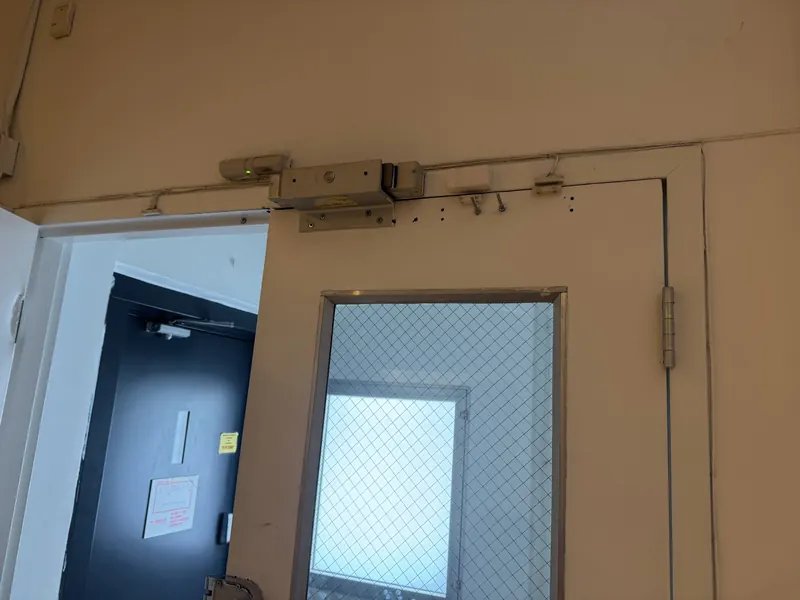
| Magnetic lock (maglock) | An electromagnet on the frame holds an armature plate on the door; it unlocks when power is cut. | Release means that meet §1010.1.9.8 or §1010.1.9.9, release on power loss (and on fire alarm activation for sensor-released doors), UL 294 listing, and whether a keyed lockset is still required. |
| Video intercom | Lets residents see and talk to visitors and release the entrance lock remotely. | Required intercom functions for 8+ unit buildings; mounting heights; release works for every unit. The intercom controls entry only, never egress. |
| Exit (request-to-exit) button | A wall button that unlocks an electrically locked door for people leaving. | Where it serves as the §1010.1.9.8 manual device: "PUSH TO EXIT" sign, 40 to 48 inches high, within 5 feet of the door, direct power interruption, at least 30 seconds unlocked. |
| Panic hardware | A push bar or pad across the door that unlatches it with one push. | Required in certain occupancies; UL 305 listing; at least half the door width; no more than 15 lbf to unlatch; no added locks that defeat it. |
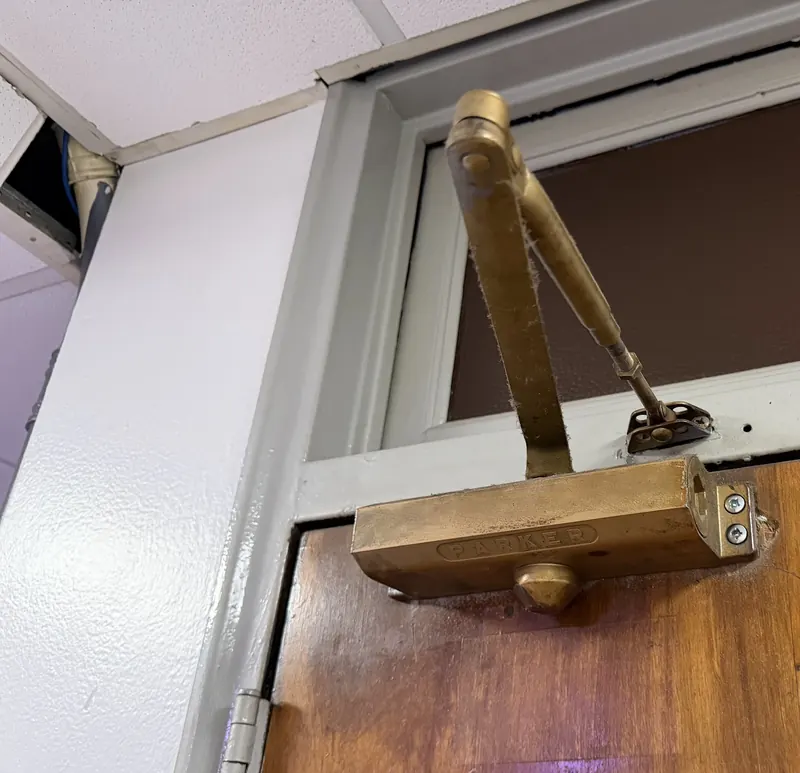
| Self-closing door | A closer (overhead, concealed or floor) returns the door to closed and latched. | Door closes fully and latches from full open; no hold-open devices unless approved; closer, hinges and frame in good repair. |
Recent NYC regulatory changes
Several changes in the past few years affect how entrance and corridor doors are regulated and enforced.
| When | Change | What it means for owners |
|---|---|---|
| 2018 | Local Law 111 of 2018 added Admin. Code §28-315.10 and HMC §27-2041.1 | Doors to interior corridors and stairs in Group R-1 and R-2 buildings had to be self-closing by July 31, 2021, and owners must keep them in good repair. |
| June 2022 | Local Laws 62 and 63 of 2022, passed after the Twin Parks fire | Self-closing doors must return to closed and self-latch. Correction time cut from 21 to 14 days, mandatory reinspection, and higher penalties, including $250 per day after the correction date. |
| 2022–2023 | Local Law 71 of 2022 | HPD's proactive self-closing door program: 300 higher-risk multiple dwellings selected each year for door-by-door inspection, beginning September 2023. |
| November 7, 2022 | 2022 NYC Construction Codes take effect (Local Law 126 of 2021) | Projects filed on or after this date are designed under the 2022 Building Code, including the §1010.1.9 electric locking provisions described above. |
| January 17, 2026 | NYC Existing Building Code enacted; Local Law 42 of 2026 sets its effective date | A dedicated code for altering and maintaining existing buildings takes effect July 17, 2027. Until then, existing buildings remain under the Administrative Code and the 2022 codes (or, at the owner's option for prior-code buildings, the 1968 Building Code). |
The numbers show why enforcement has tightened. In HPD's fiscal year 2025 report (opens in a new tab), inspectors in the proactive program checked 9,654 apartment and public-area doors in 300 buildings between October 2024 and May 2025. About 70% were in proper working order, and the inspections produced nearly 3,000 self-closing door violations. All but 11 of the buildings inspected received at least one.
Enforcement and legal examples
We don't cite court decisions here, because outcomes turn on facts this article can't assess. These public examples show how the rules are enforced in practice:
- Self-closing doors after deadly fires. The city required self-closing doors in residential buildings in 2018 (Local Law 111 of 2018). After the 2022 Twin Parks fire, the City Council shortened correction times and raised penalties (Local Law 63 of 2022 (opens in a new tab)).
- Proactive door-by-door inspections. HPD now selects 300 multiple dwellings a year based on prior self-closing door complaints, repeated heat complaints, DOB fire safety violations, or missing boiler reports, and inspects common-area and apartment doors (HPD FY25 report (opens in a new tab)). When building staff would not provide access, HPD conducted joint inspections with FDNY.
- Inspection-driven hardware changes. In our own work, a DOB inspection flagged magnetic locks on an apartment building's front doors. The fix kept the access control and replaced the locking hardware (case study).
Building entrance inspection checklist
Use this as a walk-through for each entrance, exit and corridor door. It helps you spot potential problems; it isn't a determination of compliance. HPD's owner guidance recommends opening each door fully and checking that it closes and latches on its own (HPD (opens in a new tab)).
Egress side (inside)
- Each exit door opens from inside with one motion, without a key, card, code or special knowledge.
- No padlocks, chains, surface bolts, double-cylinder deadbolts or added locks on exit doors.
- Electric locks release when the exit hardware or PUSH TO EXIT button is used, and stay released long enough to get out.
- Electric locks release on power failure. Sensor-released doors also unlock on fire alarm activation where the building has a fire alarm. Ask for both to be tested.
- PUSH TO EXIT buttons are signed, mounted 40 to 48 inches above the floor and within 5 feet of the door.
- Panic hardware (where present) works with one push and nothing defeats it.
Entry side (outside)
- Main entrance lockset is heavy duty, with an auxiliary latch, and the latch can't be slipped.
- Tenant key operates the outside cylinder and does not also open apartment doors.
- Intercom calls every apartment and each apartment can release the door (8+ unit buildings).
- Entrance lighting works across the full width of the entranceway.
Closing and latching
- Entrance, corridor, stair and apartment doors close fully and latch from the fully open position.
- No wedges, kick-down stops, taped latches or disconnected closer arms.
- Closers aren't leaking, hinges are tight, and doors don't bind or drag on the frame or floor.
- Gaps at the bottom of apartment doors aren't large enough to call for refitting.
How EntryPoint Security can help
EntryPoint Security is a licensed NYC locksmith and commercial security company working with property owners and managers across New York City, Northern New Jersey and Westchester. For building entrances, we:
- Walk your entrances, exits and corridor doors and document the hardware, closing and latching condition, and electric locking setup on each.
- Repair and replace door closers, locksets, exit devices and cylinders.
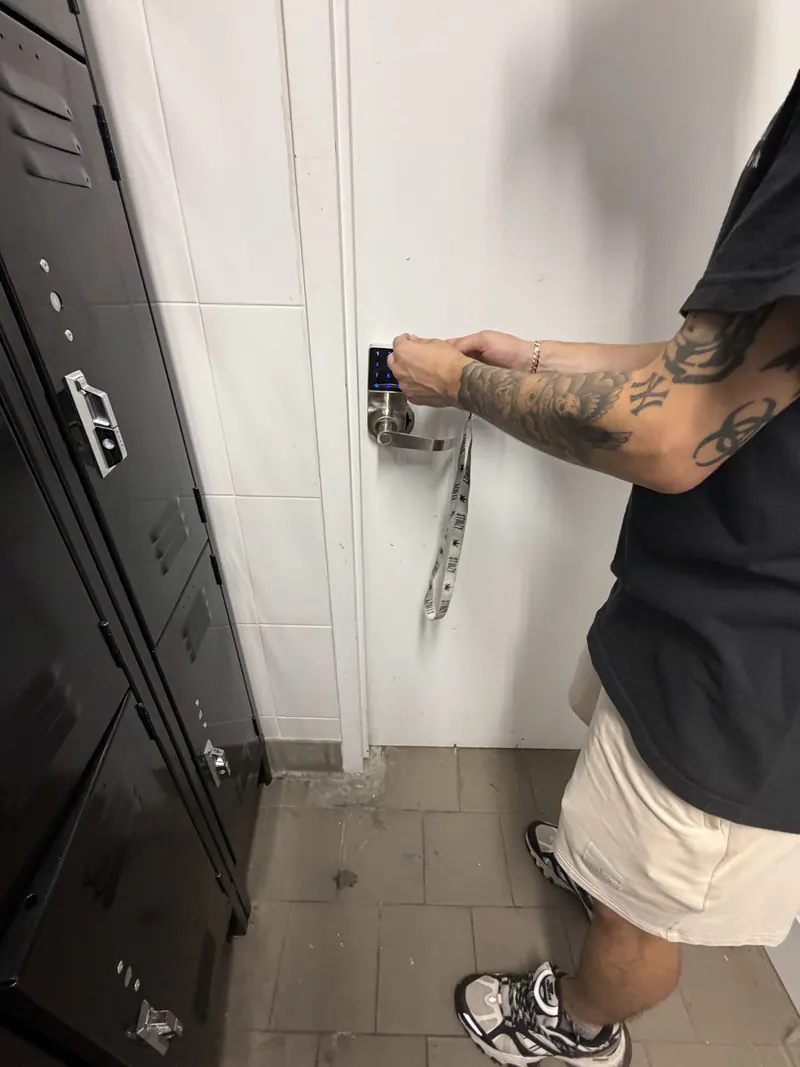
- Install and service access control, electric strikes and magnetic locks, wired so the release devices work as intended.
- Install and repair video intercoms for multifamily buildings.
- Respond to failed entrance hardware through emergency service.
We are not a substitute for your architect, engineer, code consultant or attorney. Where a door needs a code determination or filed work, we'll tell you, and we can work alongside your design professional.
Sources
- NYC Building Code (2022), Chapter 10: Means of Egress (§§1010.1.9–1010.1.10, §1010.4) (opens in a new tab)
- NYC Building Code (2022), Chapter 3: Occupancy Classification (§310) (opens in a new tab)
- NYC Department of Buildings: 2022 Construction Codes (opens in a new tab)
- NYC Department of Buildings: Existing Building Code (opens in a new tab)
- NYC Administrative Code (Title 27 Housing Maintenance Code; Title 28) (opens in a new tab)
- FDNY: NYC Fire Code (Chapter 10, FC 1027) (opens in a new tab)
- HPD: Self-Closing Doors (opens in a new tab)
- HPD: Self-Closing Door Proactive Program Report, FY2025 (opens in a new tab)
- Local Law 63 of 2022 (self-closing door corrections and penalties) (opens in a new tab)
- 1 RCNY §42-01: Entrance Doors, Locks and Intercommunication Systems (opens in a new tab)
- NYS Multiple Dwelling Law §50-a (opens in a new tab)
- 18 NYCRR §491.18: Environmental standards (adult shelters) (opens in a new tab)
- 18 NYCRR §900.1: Scope (family shelters) (opens in a new tab)
- NYC Council: Twin Parks fire safety legislation (May 19, 2022) (opens in a new tab)
This article is provided for general educational purposes and does not constitute legal advice, professional engineering advice, or an official determination of code compliance. Requirements vary based on building occupancy, construction history, approved use, and individual door configurations. Building owners should consult qualified professionals and applicable authorities before undertaking regulated work.