Why New York weather is hard on locks and outdoor devices
Wide temperature swings
In a typical year, New York's coldest readings fall into the single digits and its hottest reach the mid-to-high 90s. Days of 100°F and above do happen (Central Park's record is 106°F), and so do sub-zero nights (the record low is −15°F) (National Weather Service (opens in a new tab)). The air temperature is only part of it: a dark metal door or frame in direct summer sun gets considerably hotter than the air around it, and the same door sits at the outdoor temperature on a January night.
Metal expands as it warms and contracts as it cools. The movement is small: an aluminum storefront door about 7 feet tall changes length by roughly a tenth of an inch over a 90°F swing, and a steel door by about half that. But locks and strikes are built to small tolerances, and sun-heated doors can also bow, which affects how the lock engages with its strike (Window & Door (opens in a new tab)). A latch that lines up perfectly in October can drag in January or bind in July.
Water, freezing and salt
Temperature swings do the most damage when water is involved. Water that gets into a lock, a strike or an intercom panel freezes and thaws repeatedly, which can make small alignment problems worse, speed up corrosion and block moving parts (ButterflyMX (opens in a new tab)). Rock salt tracked to the entrance adds corrosion on top of that. Sodium chloride is one of the most corrosive common de-icers for steel, cast iron and aluminum (Transportation Research Board (opens in a new tab)).
Bottom rail locks: the winter weak spot on NYC storefronts
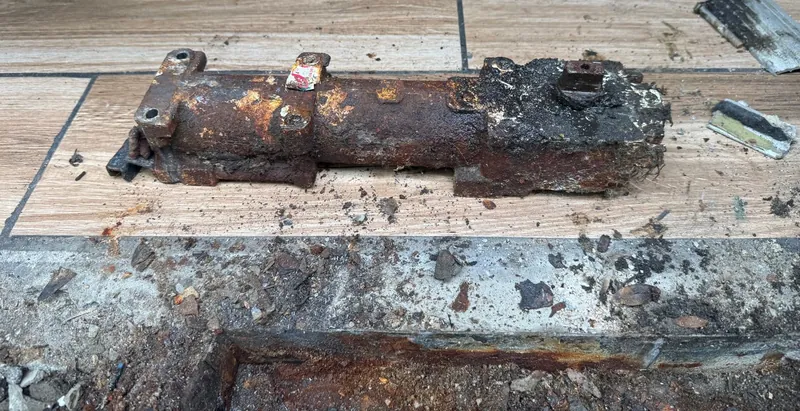
Many New York storefront and glass entrance doors are locked with a bottom rail lock: a deadbolt mounted in the bottom rail of the door that throws down into a strike set in the floor or threshold. It is a strong, simple design, but it sits exactly where snow, slush, salt and grit collect.
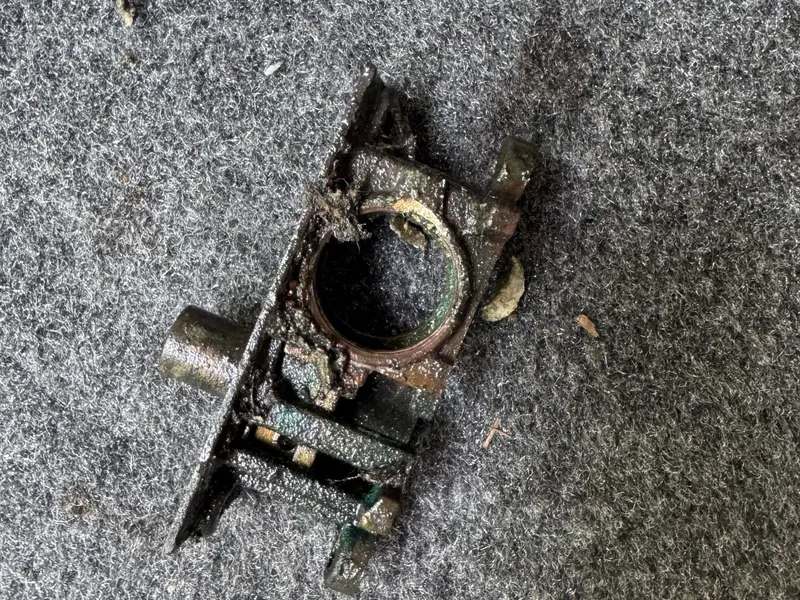
In winter, the floor strike fills with packed snow, ice and salt. The bolt can't drop fully, or it gets frozen in place, and someone forces the key or the door. The usual result is a broken bolt, a damaged cylinder or a seized mechanism, often on the coldest morning of the month.
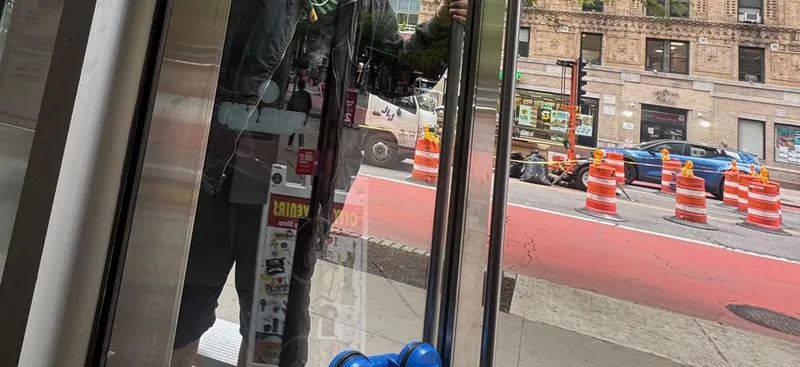
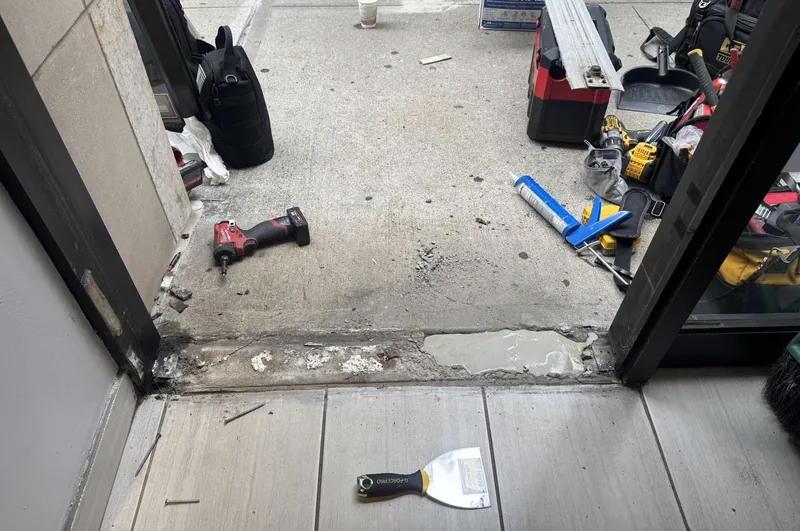
The repair is not always small. Depending on the door, replacing a failed bottom rail lock can mean taking the entire door off its hinges or pivots to work on the bottom rail. In our experience, a bottom rail replacement that includes removing and rehanging the door can cost more than $2,000. That is before counting what the closed door costs you: a studio with a class waiting outside at 18°F, or a shop that can't open on a weekend, can lose more than the repair.
The bottom rail checklist is step 7 in the maintenance steps below.
Ten winter maintenance steps for locks, closers and intercoms
The steps below are safe for a property manager, superintendent or tenant to do. Where a step involves wiring, fire-rated doors or exit hardware, have a professional do the work.
1. Lubricate locks with a dry lubricant, not regular WD-40
Lubrication is the cheapest protection a lock can get. Use a dry lubricant made for locks, usually PTFE (Teflon) based. It goes on wet, the carrier evaporates, and it leaves a thin dry film that doesn't hold dust. A can usually costs around $10 at a hardware store. Search for "lock dry lube" at Home Depot (opens in a new tab) or Amazon (opens in a new tab) and choose one labeled for locks.
Avoid the classic multi-use WD-40 and other oily sprays in lock cylinders. They leave a wet film that collects dust and grit and can eventually make the pins stick (Angi (opens in a new tab)). Note that the WD-40 Company also sells separate dry PTFE lock lubricants, which are fine; it is the original blue-and-yellow can that doesn't belong in a lock. Powdered graphite works too, but in humid conditions it can turn into a paste, so we prefer PTFE for New York.
- Key cylinders: spray a little on the key or into the keyway with the straw, insert the key, and turn it back and forth a few times. Wipe off the excess.
- Latches: push the latch in and spray into the gap around it, then work the latch several times.
- Deadbolts: extend the bolt, apply a light coat, and lock and unlock a few times.
- Bottom rail locks: lubricate the bolt and the cylinder the same way.
More is not better. Lubricating before winter and again in spring is enough for most doors; very busy entrances may need it every few months. Don't spray lubricant into magnetic locks, card readers, intercoms or the electrical parts of electric strikes.
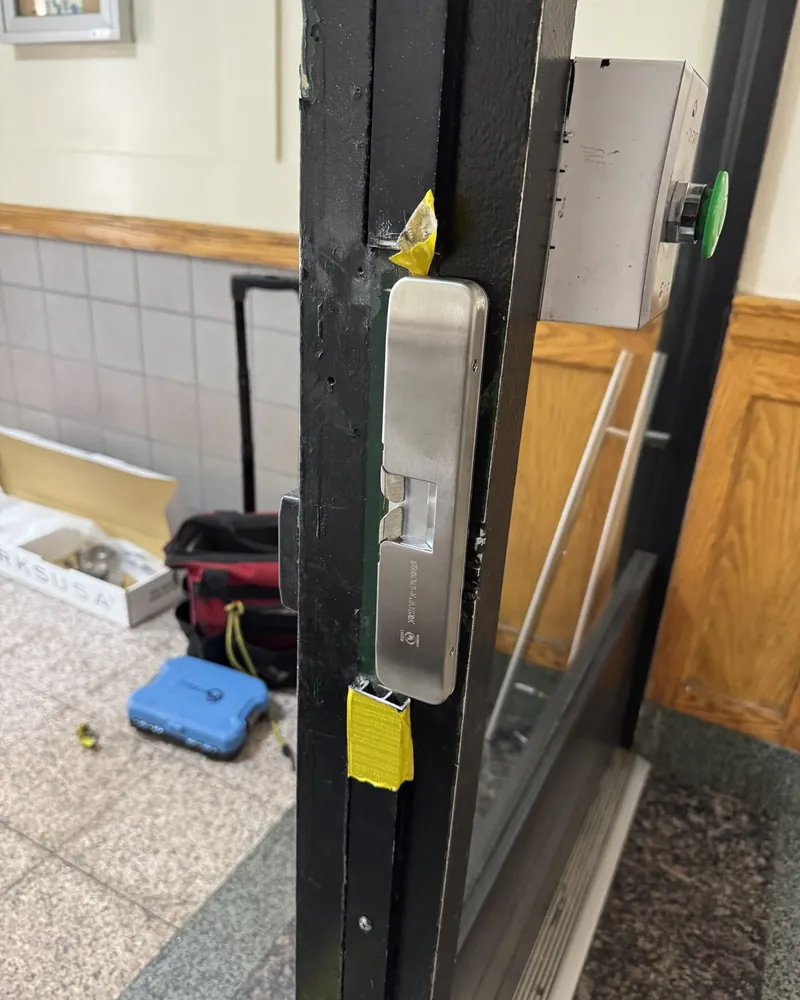
2. Tighten loose screws
Loose screws are where most door problems start. When hinge screws loosen, the door sags and the latch stops lining up with the strike. Loose lock and trim screws let levers droop and lock bodies shift. A loose closer arm or bracket lets the door swing and slam. Every slam then loosens things further. Go over hinges, strike plates, lock trim, closer bodies and arms, and exit devices with a screwdriver. If a screw spins without tightening, the hole is stripped: replace it with a longer screw or a through-bolt rather than leaving it.
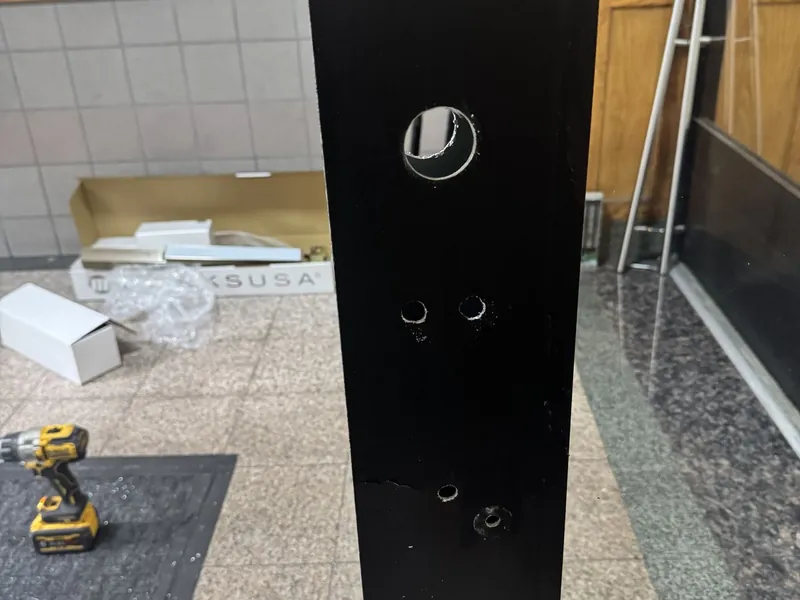
3. Replace missing covers and keep water off electronic locks
Check that every cover is in place: lock and cylinder covers, maglock housings and end caps, junction box covers and the cover plates on bottom rail locks. Look at where water goes when it rains or when snow melts on the door. Magnetic locks, electric strikes and their wiring should not sit where water runs or pools, and cable entry points should be sealed or protected.
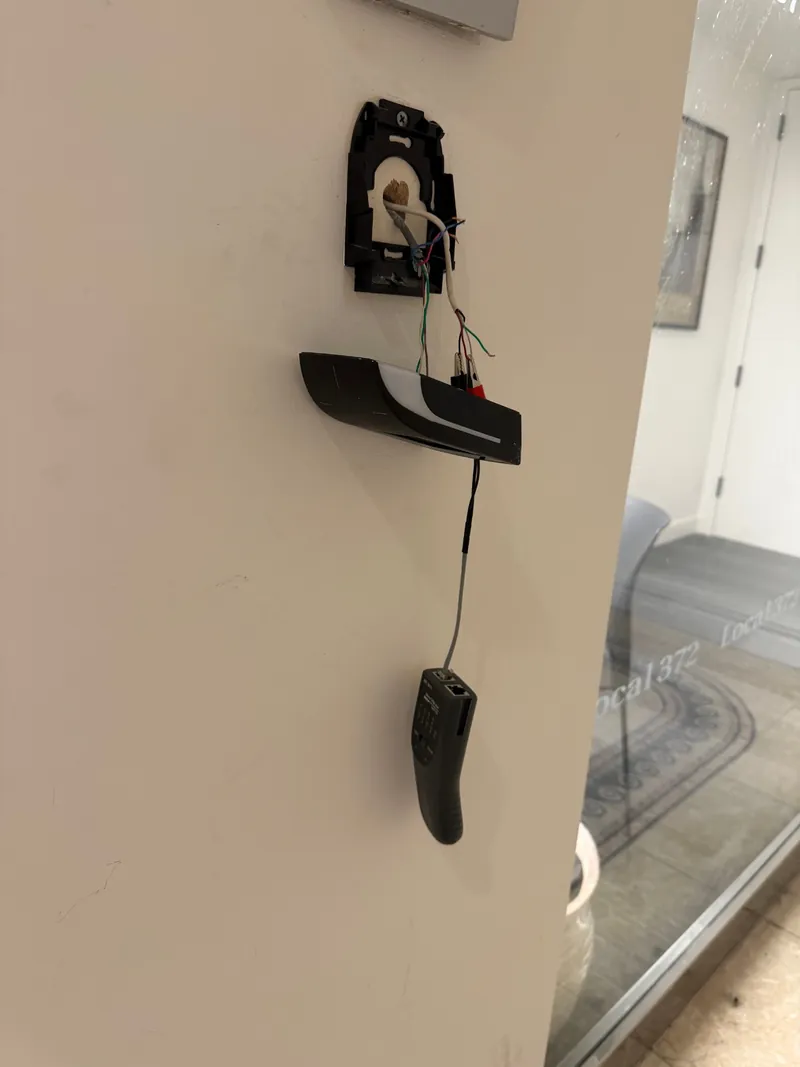
4. Seal intercom panels, card readers and strike cutouts
Moisture is a common cause of winter intercom trouble: water gets into exterior panels or cable runs and corrodes connections, and the fault often appears only at night or in a cold snap (ButterflyMX (opens in a new tab)). Inspect the gaskets and seals around outdoor intercom panels, card readers and keypads, and the cutouts in the frame around electric strikes. Replace damaged gaskets and seal gaps with exterior-grade silicone.
One caution: many outdoor devices have a drain or weep opening at the bottom so that any water that does get in can get out. Seal the top and sides, check the manufacturer's instructions, and don't block the drain.
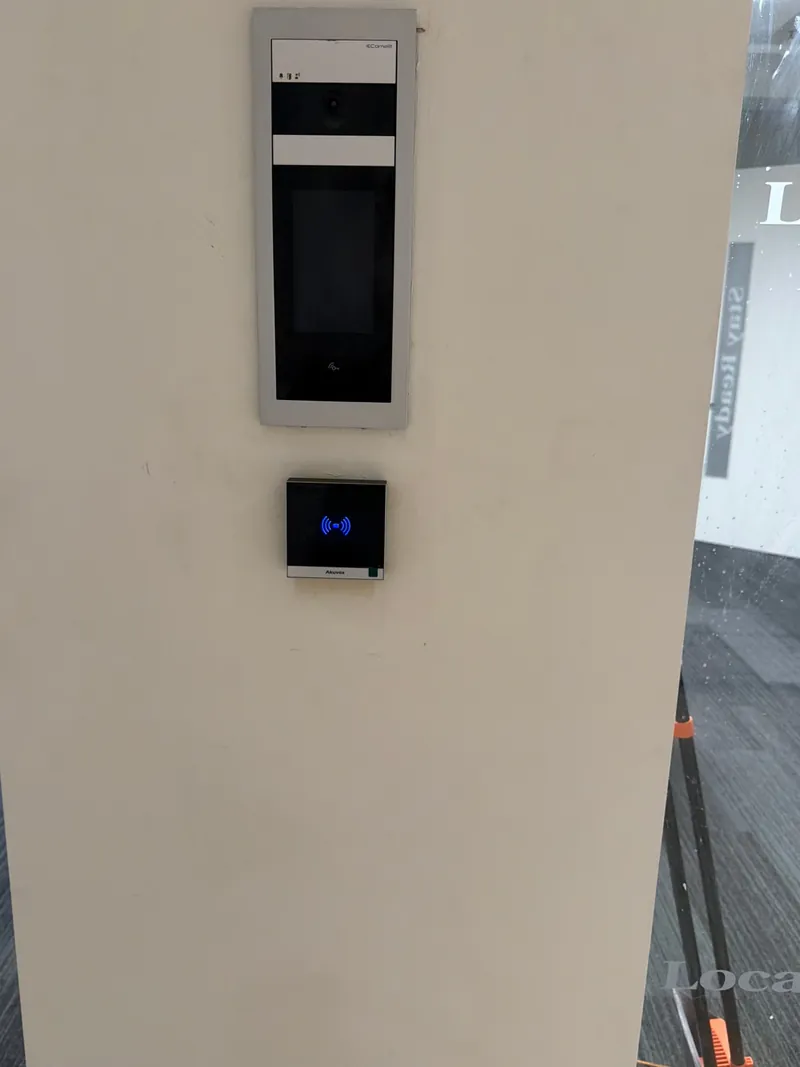
5. Check door closers: firm enough for wind, but no slamming
A door closer has to pull the door shut and latch it, even with wind pushing on the door. Cold also thickens the hydraulic fluid in many closers, so a closer that worked in September can close slowly and fail to latch in January (National Lock Supply (opens in a new tab)).
The opposite problem is just as harmful. A door that slams hammers the latch, the strike, the maglock or electric strike and the frame on every cycle, and cold metal parts take that impact worse. A slamming door usually needs its closer adjusted first (closing speed, latch speed and backcheck). If the closer is leaking oil or won't hold an adjustment, replace it.
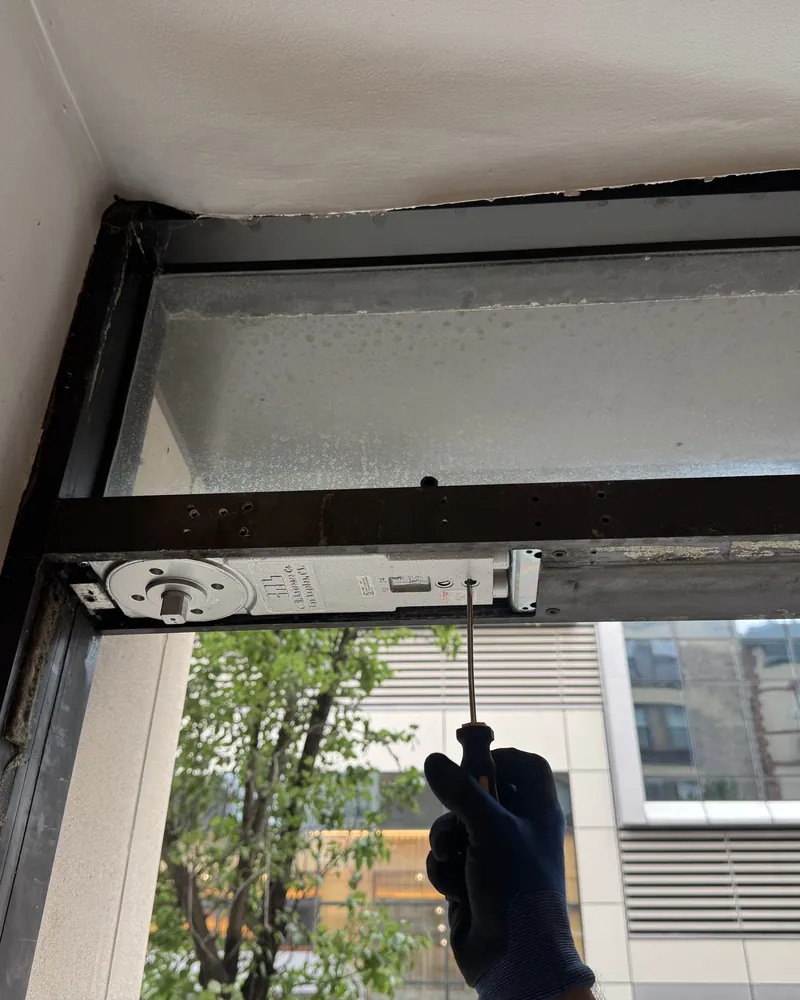
6. Make sure latches and bolts sit freely in their strikes
Close the door and lock it. The latch and the deadbolt should slide into the strike without anyone having to push, pull or lift the door. If you have to lean on the door to lock or unlock it, the bolt is under side load every time the door is closed, and that pressure eventually breaks it.
Common causes are a sagging door (see step 2), a strike that has shifted, weatherstripping that is too thick or has swollen, and seasonal movement of the door and frame. Small strike adjustments fix many of these. Recheck after the first real cold spell, because a door that lines up now may not in January.
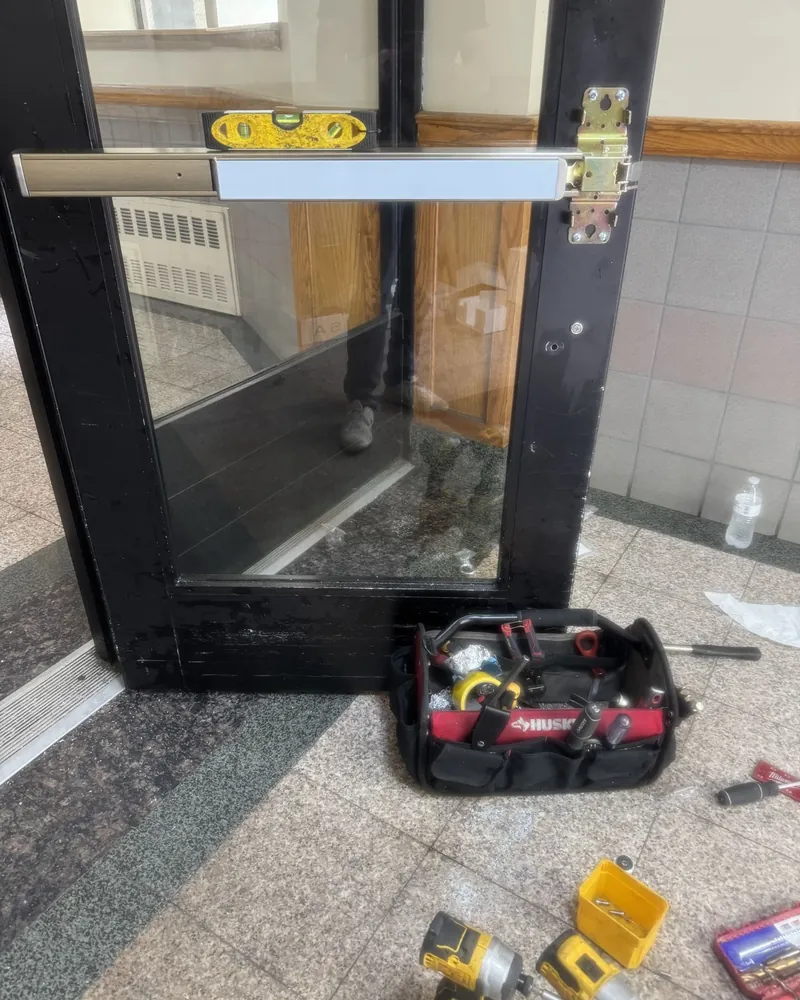
7. Bottom rail locks: keep the floor strike clean
- Lubricate the bolt and cylinder with dry lubricant before the season (step 1).
- Make sure every cover plate is present and tight, so mud, snow and salt can't get into the mechanism.
- Clean the floor strike (the hole the bolt drops into). Clear packed snow, ice, salt and grit after every storm.
- If the bolt won't drop or retract, don't force the key. Clear and thaw the strike first (step 9).
8. Replace batteries before the cold sets in
Battery-powered keypad locks, wireless locks and wireless intercom parts lose capacity in the cold. Standard alkaline AA cells are typically rated to about 0°F, while lithium AA cells are rated down to −40°F (Energizer (opens in a new tab)). Replace batteries before winter, and use lithium cells where the lock manufacturer allows them. Check the date on the backup batteries in access control and intercom power supplies as well.
9. Know what to do with a frozen lock
- Don't force the key. A key that snaps in the cylinder turns a frozen lock into a lockout.
- Don't pour hot water on the lock. It refreezes inside the mechanism.
- Use a lock de-icer spray, or warm the lock gently. Don't heat keys that have a chip in them.
- Once it's open, dry the lock and apply dry lubricant.
- If it still won't turn, call a locksmith before something breaks.
10. Clear snow and limit salt at the entrance
Keep snow from piling against doors, floor strikes and intercom posts, and sweep salt residue off thresholds instead of letting it sit. Less corrosive de-icers cost more but are easier on metal (Transportation Research Board (opens in a new tab)). NYC property owners also have to clear the sidewalk next to their property within set times after snow stops falling (DSNY (opens in a new tab)).
A five-minute monthly routine
Once the pre-winter work is done, a quick walk-through each month catches most problems while they are still cheap:
- Every entrance door closes and latches on its own, without slamming.
- Keys turn smoothly in every exterior lock, including bottom rail locks.
- Latches and bolts lock and unlock without pushing or pulling on the door.
- No loose hinges, levers, closer arms or strike plates.
- All lock, maglock and bottom rail cover plates are in place.
- Intercom calls go through, the door releases, and card readers and keypads respond.
- Floor strikes and thresholds are clear of snow, ice, salt and grit.
- No oil leaking from door closers.
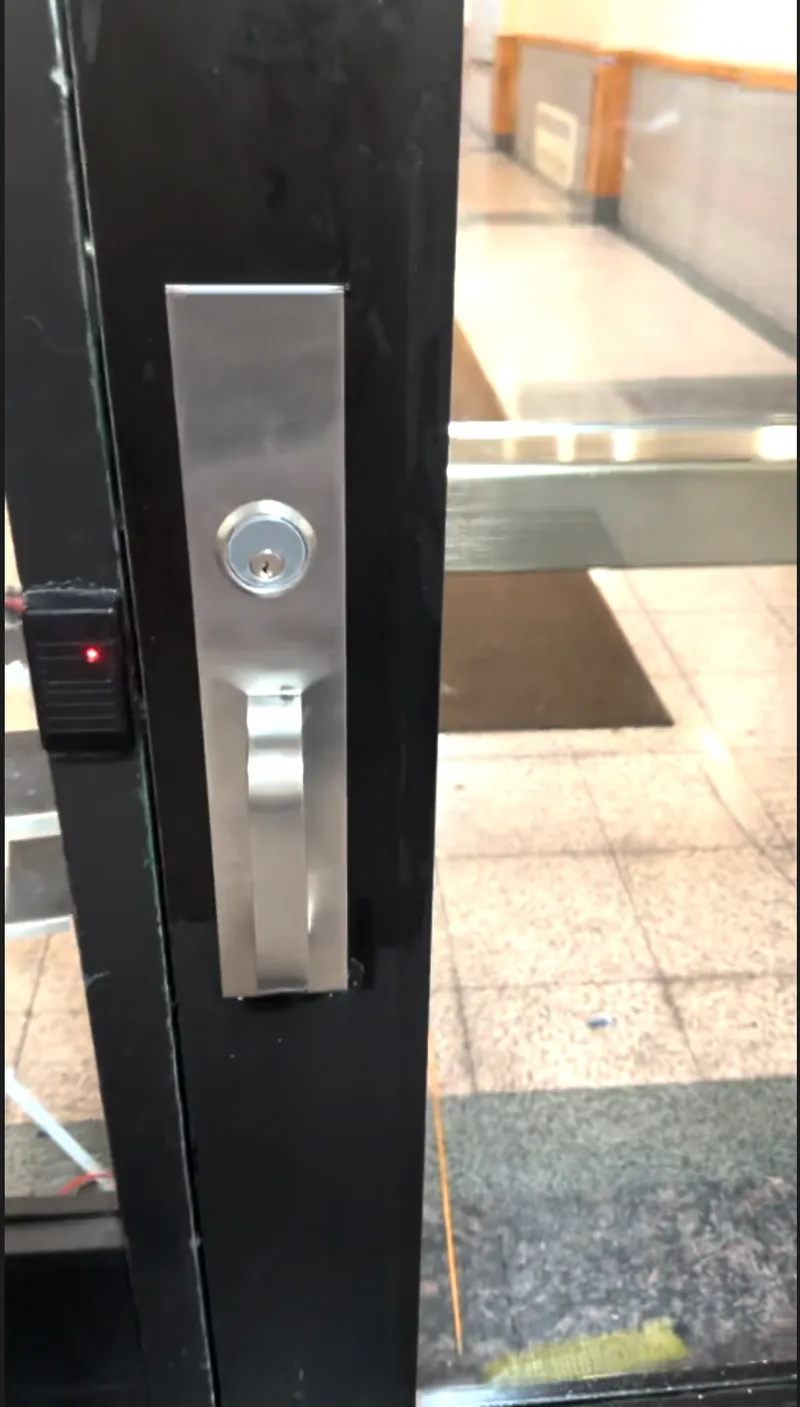
| Symptom | Likely cause | Prevention |
|---|---|---|
| Key is hard to turn or won't go in | Dirt, old oil or ice in the cylinder | Dry lubricant before winter; never force the key |
| Bottom rail bolt won't drop or retract | Floor strike packed with snow, ice or salt | Clear the strike after storms; keep cover plates on |
| Door doesn't latch in cold weather | Closer fluid thickened; strike misaligned | Seasonal closer adjustment; strike alignment check |
| Door slams | Closer out of adjustment or failing | Adjust closing and latch speed; replace a leaking closer |
| Intercom or reader fails in cold or wet weather | Moisture in the panel or cable entry | Intact gaskets; seal top and sides; keep drains open |
| Keypad lock dies in a cold snap | Weak or alkaline batteries | Fresh batteries before winter; lithium where allowed |
How EntryPoint Security can help
If you'd rather not do this yourself, or you manage more doors than you have time for, we can do a pre-winter service visit. We walk each entrance, lubricate and adjust locks, closers and bottom rail locks, tighten and realign hardware, check intercoms, readers and electric locks, and tell you plainly what needs attention now and what can wait.
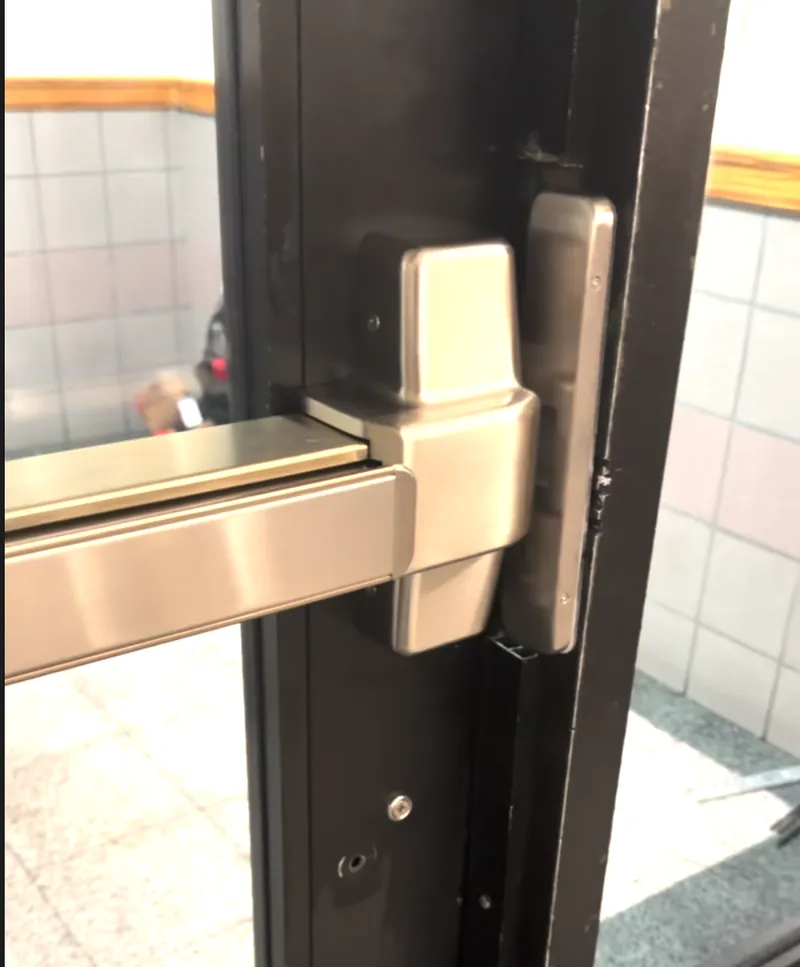
- Repair and replacement of locks, bottom rail locks, door closers and exit devices.
- Service for access control, electric strikes and magnetic locks.
- Repair and installation of building intercoms.
- Emergency service when something fails mid-storm.
Sources
- National Weather Service: Central Park temperature extremes (opens in a new tab)
- Window & Door: Thermal expansion in big doors (opens in a new tab)
- ButterflyMX: How cold weather affects apartment intercoms (opens in a new tab)
- Transportation Research Board: Corrosion evaluation of CMA and salt (NaCl) solutions (opens in a new tab)
- Angi: How to lubricate a lock (opens in a new tab)
- National Lock Supply: Door closers in cold weather (opens in a new tab)
- Energizer: Ultimate Lithium AA (L91) product sheet (opens in a new tab)
- NYC Department of Sanitation: Snow and ice removal laws (opens in a new tab)
This article is provided for general educational purposes and does not constitute legal advice, professional engineering advice, or an official determination of code compliance. Requirements vary based on building occupancy, construction history, approved use, and individual door configurations. Building owners should consult qualified professionals and applicable authorities before undertaking regulated work.